Blog

Holistic Life Leadership: Non-Profit Fundraising

.“I would ask you to question who’s at the table and who’s not at the table and to think about those voices that aren’t represented when you’re making decisions.”

– James Halliday, Board Chair at Emerging Practitioners in Philanthropy

u-s-dollar-bills-pin-down-on-the-ground-164474

If you could donate $1M+ to the Non-Profit of your choice, who would you give it to?


If you’re a Non-Profit, what would you do with an additional $1M+?


If you’re an executive at a For-Profit company, why do you donate to Non-Profits?

Why Fundraising is Important – Just as For-Profit companies need to generate enough revenue to stay-in-business, so do Non-Profits.


However, unlike For-Profit companies, Non-Profits give away the majority of the money they receive, in order to fulfill their primary mission; providing a helping hand to others in need.


Once the Non-Profit’s expenses are paid, 100% of the donations can be used exclusively to helping others.

people-holding-boxes-2346558
abundance-bank-banking-banknotes-259027

Thus; fundraising has a 100% impact with every dollar raised, beyond the Non-Profit’s annual expenses!


Creating Large, Fundraising Donations from For-Profit Companies – This donation channel has large, untapped opportunities!


These donations will come from a new, diversified Fundraising Channel for the Non-Profits. Meanwhile, the Non-Profits can continue asking for fundraising support from For-Profit companies using their age-old, traditional fundraising approaches.

How do you ask for and get an additional $100K, $1M or more … beyond what For-Profit companies are already donating?


The simple answer: help them create new, specific Net Income streams, so they can donate 5%, 10% or more of this realized, new Net Income you helped them create, to your Non-Profit!


Not Sure Yet: Here’s a Little Secret – Our teams are already in your backyard creating new Net Income for companies that already donate to your (or ones you’d love to donate to your) Non-Profit. You’re just not getting a direct benefit donation from them.

photo-of-woman-putting-her-finger-on-her-lips-1759406

If you’re a Non-Profit Executive Director, Board Member, etc., you may love the thought of adding $1M+ per year of donations from new or existing corporate partners. But, you may also have a concern about how to approach your current or potential corporate partners.


Here’s a little background on our team’s successes at For-Profit companies:

  • Our teams have saved your corporate partners more than $1.2B over the last 20 years.
  • 90 Of the F500’s have used one or more of our services, including #1 for more than 10 years.
    • Do you think it took a ton of business-savvy, for them to climb to being #1 in the U.S?
    • What do they know that many of the other 499 companies in the F500… don’t?
    • Why not use the same services #1 uses at your For-Profit company?
  • 100+ Companies with Revenues as low as $20M per year have used our services to save $100K+


Lastly; your Non-Profit wasn’t able to get a direct slice of these big Net Income increases … until now!


Now… Non-Profits can get a big donation directly, using our simple, collaborative model.


If you’re a talented, action-oriented Non-Profit Executive Director, CEO, Board Member or volunteer that would like to raise $100K+, set up a time for us to explore your unique opportunities!


Yes; Odd as it may Sound… Everybody Actually Wins – The fundraising model is so simple, yet unique, that it may come across initially as complex. We just ask people not to overthink it, work professionally with us and collaborate effectively to make a difference!


Even though our team’s largest Net Income increase at a For-Profit company was $51M, we still work with For-Profit companies that have as little as $250K Net Income increase opportunities.


Here’s a simple example for Non-Profits:

   $1,500,000 – Realized (not theoretical) Net Income increase at your For-Profit Partner company

               10% – Donation % to your Non-Profit 

   $   100,000 – Donation amount to your Non-Profit (directly from the For-Profit Partner company)


Do you want to get your Non-Profit engaged in this significant opportunity?


It gets harder and harder each year to fundraise using the tired, traditional fundraising models. This is a key reason why the turnover rate is so high in the Non-Profit Development Director position.


Is your Non-Profit ready to raise large, sustainable flows of new donations?


The beneficiaries of this new fundraising opportunity, are counting on your and our leadership abilities, to get this implemented for them! 


Who changes the world? I believe it’s almost exclusively the Top-7%. They are the only ones with the Talent Portfolios and social consciences needed to actually implement significant positive social impact.


If you believe you’re one of these executives, we’d love to explore possible opportunities.


Get MAD!  Get Making A Difference! ~ JR
 

2011-12-a-JMR-Photo

About the Author

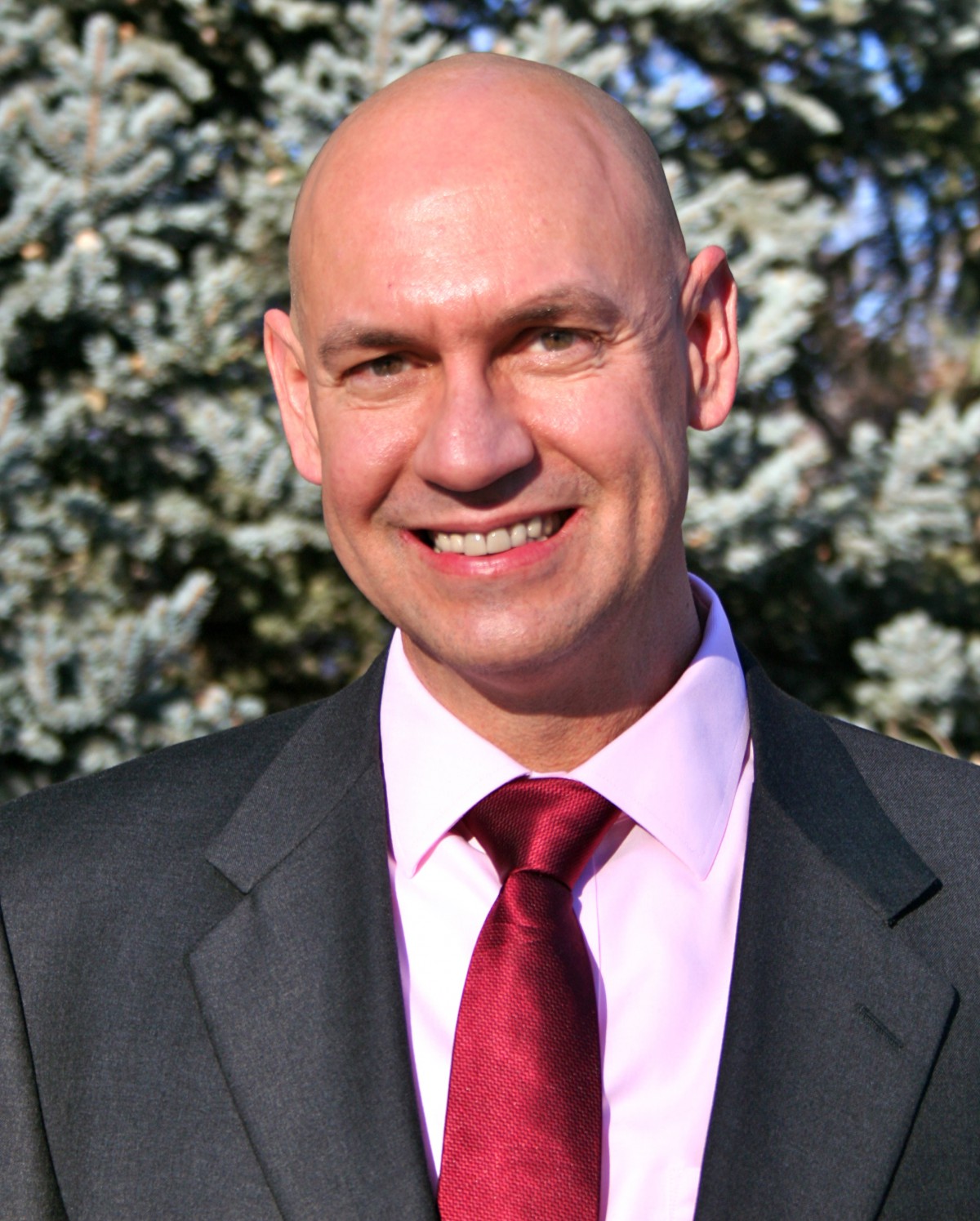
James Roncevich (JR) is one of the most thought-provoking leaders in our complex, fast-paced world. He’s also the architect of the business-savvy Social Impact model that saves companies $M’s first, so they have more to donate.


He earned his MBA from The Ohio State University and his holistic life leadership book is available on Amazon

Written by IPG Social Impact's President

Organizational Leadership Development: Extending it Beyond the Work Environment

“I’ll bet most of the companies that are in life-or-death battles got into that kind of trouble because they didn’t pay enough attention to developing their leaders.” – Wayne Calloway, former Chairman, Pepsico, Inc.

selective-focus-photo-of-a-red-tulip-flower-2480072

Where have you developed, what you consider to be, your most unique, valuable leadership skills that set you apart from the crowd?


Does your organization provide leadership development that also extends deep into other areas of your life?


Does your organization consider leadership in the community an important role, or just a “necessary” one, so the organization gains “enough” positive PR?

Please share your insights to help others. Personally, I’ve had opportunities to observe a wide-range of organizational leadership development initiatives.


Macro Observations: Here are three macro categories that seem to be prevalent in the U.S.

  1. Leadership development for a specific position
  2. Leadership development for general skills at the organization
  3. Leadership development, that is employee-centered, but highly transferable by the employee when they leave
accomplishment-accuracy-accurate-achievement-226579
orange-and-and-brown-chess-pieces-1679618

Which of these have your observed most frequently? Let’s break these three categories down to the next level of granularity.


#1 – Leadership Development for a Specific Position – Sure, this is necessary and we don’t need to delve too deeply into this one. However, why not integrate the position development content into a professional’s holistic life, both inside and outside the organization? Succinctly; invest in the professional, while focusing on their current professional responsibilities.

#2 – Leadership Development for General Skills at the Organization – Again, these are necessary since professionals change positions within the organization.


It appears, due to the broad spectrum of the content, some skill development for the professional will extend beyond the work environment. This is seldom the focus of the development; rather, it coincidentally becomes a byproduct.

people-having-meeting-inside-conference-room-1181395

#3 – Leadership Development that is Employee-Centered, but Highly Transferable by the Employee When they Leave – This translates into the organization:

  • Loving their employees
  • Developing them holistically
  • Enabling them to make greater social impact in their communities


Please note, none of the three bullets above are self-centered on the organization. Rather; they’re centered squarely on the holistic professional!


What are the financial rewards of implementing #3 (above), to the organization? No matter how you intelligently calculate the benefits, the organization wins long-term, nearly every time.


Guess who else wins, as a result of this leadership development investment, besides the organization?

  • The holistic leader!
  • The holistic leader’s community!
  • The holistic leader’s family!


Why not intelligently develop your organization’s talent holistically?


If you’re not sure how to do this, or are looking for new ways to deepen and broaden your executives’ and professionals’ talents, our team’s cutting-edge approaches may prove to be quite beneficial.


Why not attract, develop and engage your employees in business-savvy ways while simultaneously increasing Net Income and Community Social Impact by millions of dollars?


Who changes the world? I believe it’s almost exclusively the Top-7%. They are the only ones with the Talent Portfolios and social consciences needed to actually implement significant positive social impact.


If you believe you’re one of these executives, we’d love to explore possible opportunities.


Get MAD! Get Making A Difference! ~ JR

Written by IPG Social Impact's President
photo-of-person-wearing-sneaker-and-ballet-shoe-2590585
art-close-up-decor-279415

Leadership Talent IS the Alpha and the Omega

Please press the “Play Arrow” (below, left) to listen to the free-flowing audio for this blog

“Organization doesn’t really accomplish anything. Plans don’t accomplish anything, either. Theories of management don’t much matter. Endeavors succeed or fail because of the people involved. Only by attracting the best people will you accomplish great deeds.” – General Colin L. Powell

attractive-beautiful-beauty-1526814

What drives Talent Acquisition and Retention?


I observe repeatedly, Decision Making Quality (DMQ) being the key driver, followed closely by the Execution-Excellence (Ex-Ex), needed to implement high-DMQ decisions. These two key competencies go together like a hand-in-glove.


Attract Top-Tier Talent to reduce expenses (even though you pay top-talent more; I do the math in my leadership book on this topic), improve your products, enhance your customer experience and achieve sustainably higher Net Income!


There’s great news for Top-Tier organizations that fully embrace this simple, yet often complex-to-implement, answer. 

  • Top-Tier organizations consistently outperform the industry average KPI’s, year-after-year.
  • Top-Tier organizations attract and retain more Top-Tier Talent than competitors. Thus; a two-fold impact!
  • Top-Tier organizations are never satisfied; thus, they keep getting better; faster and more competitively-intelligent.


adventure-adventurer-backpacker-1576937
cash-commerce-currency-327531

However; I’ve saved the Best News for last.


Top-Tier Organizations develop the most comprehensive, holistic leaders. This creates a cornucopia of opportunities for not just the organization, but for the individual leaders, both inside and outside the organization!


Top-7%, holistic talent is worth their weight in gold to the organization, community and society overall!

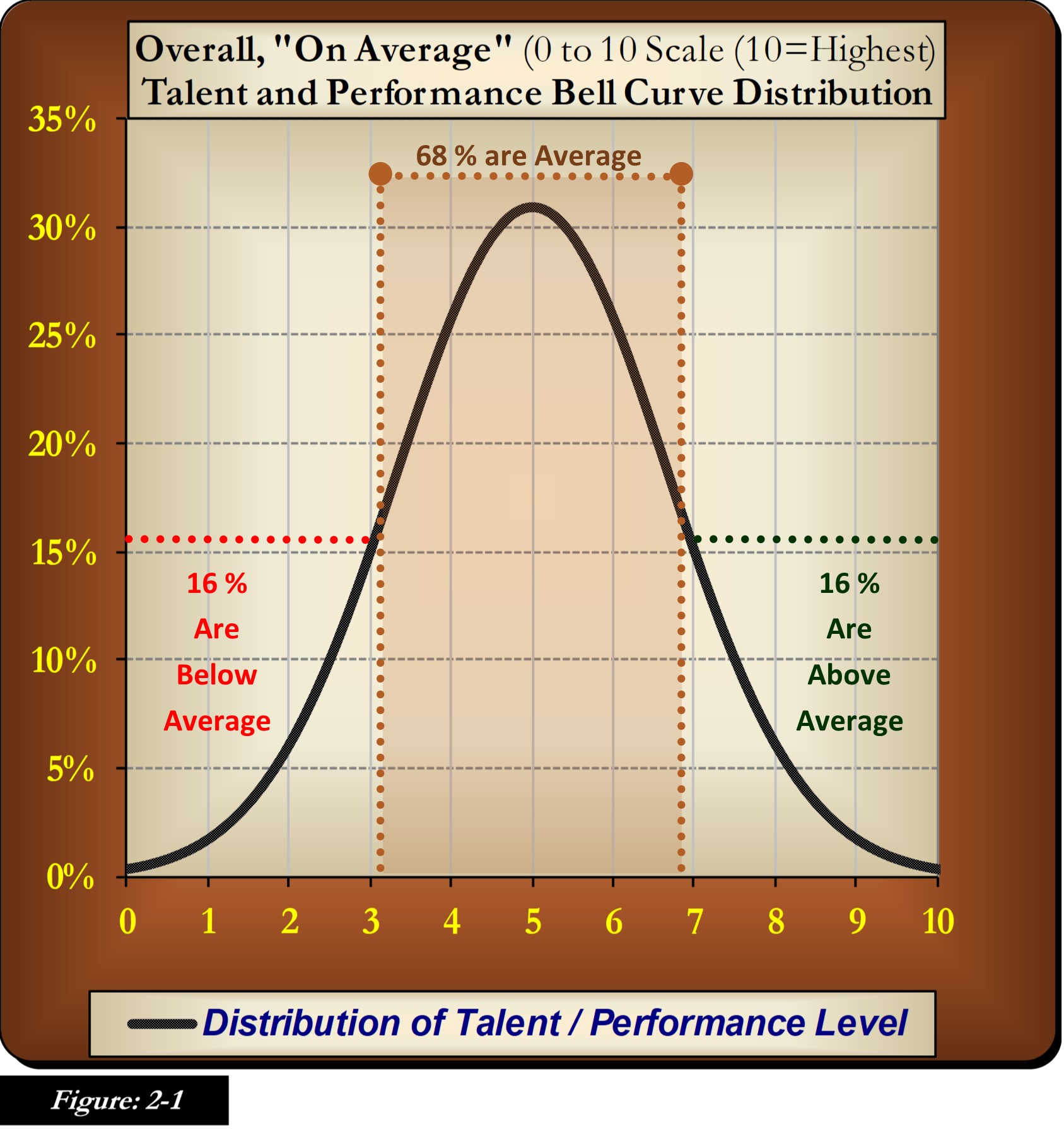
The bad news; as we know from the objective Bell-Curve (and I’ve witnessed this happening time-and-again), 84% (68% in the Bell & 16% below the Bell) are “Average” or “Below Average” leaders.


Some leaders get frustrated at me pointing out this well-known fact. I didn’t create the Bell-Curve, I’m just referencing its completely unbiased, statistical facts.


Top-Tier Talent recognizes this and responds in qualitative ways!

Objectively (regardless if we like it or not), 84% of Leaders, Talent, Profits, etc. are

As leaders reading our blog, you know our business model is quite simple; we save organizations $M’s so they can give 5% or more (at their discretion) of this new, realized Net Income to the Non-Profit of their choice, including their own Foundation.


The savings target for Fortune 500’s is $7.5M, but we’ve worked with companies with under $50M in Revenues to only save them as little as $250K.


Regardless, if the savings is $1M or $51M per year (our largest cost savings), 10% or $100,000 per $1M of savings, is still quite meaningful to those in need of:

  • Clean drinking water
  • A roof over their head
  • Medical facilities for childbirth
  • Food

Will 93% of the leaders reading this content actual do more than “Like” this blog, LinkedIn Post, etc.?

  • 84% (approximately) Won’t do anything (per the unbiased Bell-Curve)
  • 9% (approximately) Will want to do something
  • 7% (approximately) Will actually do something


Which of these 3 groups are you in?


What is your life story? Are you a really a Difference-Maker?

4k-wallpaper-beans-beverage-1749303

If your child didn’t have fresh water, access to medical care, food to eat, etc., what group would you want leaders to be in?


Want to consistently lead a Purpose-Driven Life?


Who changes the world? I believe it’s almost exclusively the Top-7%. They are the only ones with the Talent Portfolios and social consciences needed to actually implement significant positive social impact.


If you believe you’re one of these executives, we’d love to explore possible opportunities.


Get MAD! – Get Making A Difference! ~ JR

Written by IPG Social Impact's President
action-action-energy-active-2402799
black-and-white-blur-boy-392027

Leadership: Providing Hand-Ups vs. Hand-Outs

Please press the “Play Arrow” (below, left) to listen to the free-flowing audio for this blog

“I didn’t see it then, but it turned out that getting fired from Apple was the best thing that could have ever happened to me. The heaviness of being successful was replaced by the lightness of being a beginner again, less sure about everything. It freed me to enter one of the most creative periods of my life… It was awful tasting medicine, but I guess the patient needed it.” ~ Steve Jobs – From his speech at Stanford University, 2005

art-black-dark-1276357

Who are the very few people who have made the biggest differences in your life?


Did you dislike the hand-up they gave you at the time, but accepted it anyway, only to realize its amazing value years later?


Did they give you a hand-up, a hand-out or give you some “awful tasting medicine” so you could wake up and begin rebuilding an even better holistic, purpose-driven life?

What are the key differences between hand-ups and hand-outs?

  • Hand-ups come with work clothes; not hand-outs.
  • Hand-ups come with loving expectations from the givers; not hand-outs.
  • Hand-ups come with unexplainable levels of confidence in you; not hand-outs.
  • Hand-ups come with tough-love; not hand-outs.
  • Hand-ups come with genuine appreciation for who you are; not hand-outs.
adult-blur-clouds-950859
barn-colorado-colorful-221502

I worked on the homeless initiatives for the city of Denver with the mayor’s staff. When the mayor became governor, I received the privilege to work on the state of Colorado’s homeless initiatives. Differentiating between hand-ups and hand-outs is critical in creating sustainable solutions for the homeless. The differences are also critical for developing sustainable success that enables you to reach the pinnacle of your potential professionally, personally and in the community.

Although homelessness is a relatively straight-forward example for differentiating hand-ups from hand-outs, the same core-principles apply to nearly all other challenges in your life.

  • Find people that love you enough to let you fail, but give you enough help to enable you to succeed.
  • Find people who help you holistically; that is, professionally, personally and in your communities.
  • Find people who appreciate you so much, they’ll actually put your interests ahead of their own.


balance-cobblestone-conceptual-279470

We travel uniquely special journeys through life. Sometimes we are giving hand-ups while other time we’re getting hand-ups.


I believe the most special hand-ups I’ve given, have come at the darkest, toughest times in my life where I didn’t have much to give, but gave anyway, while smiling and expecting absolutely nothing in return.


Giving out of your “excess supply of resources” is a hand-out, not a hand-up. Giving from your heart, finite time or limited resources while getting engaged in the unconditional success of the other person, that’s where leadership growth takes place.


If you want to be a holistic impact player in the game of life, giving is the only currency accepted!


Who changes the world? I believe it’s almost exclusively the Top-7%. They are the only ones with the Talent Portfolios and social consciences needed to actually implement significant positive social impact.


If you believe you’re one of these executives, we’d love to explore possible opportunities.


Get MAD! – Get Making A Difference! ~ JR


Written by IPG Social Impact's President
bright-clouds-cold-618833
animal-animal-photography-close-up-2224547

The Exceptional Leadership Paradox Curve

Please press the “Play Arrow” (below, left) to listen to the free-flowing audio for this blog

adult-beautiful-beauty-2065203

The majority of foundational leadership skills seem quite easy to understand and to implement sustainably.


However, the learning process and content completely changes once you reach an “Above Average” or “Exceptional” Leadership Performance Level.


Why?


It’s actually somewhat simple to comprehend, if / once we reach two key transitional development points of leadership performance.


Let’s take a look at these two transitional points; we’ll refer to them as Tier #2 and #3 (while Tier #1 is the original tier that everyone starts in), by using a basic 0 to 100 scale, with 100 being the theoretical “Perfect” performance level.


Tier #1 – 0 to 68 – Our leadership learning and implementing skills develop basically upward from 0 in a linear line. We learn, we do, we adjust, we get better, etc., until we reach the 68th percentile performance level (or “cap out” below this level). We can sync Tier #1 with the standard, objective Bell-Curve. Thus, if we reach a 68.1, we’re in the Top-32% in leadership performance.

“The Paradoxical Commandments”


People are illogical, unreasonable, and self-centered.

Love them anyway.


If you do good, people will accuse you of selfish ulterior motives.

Do good anyway.


If you are successful, you will win false friends and true enemies.

Succeed anyway.


The good you do today will be forgotten tomorrow.

Do good anyway.


Honesty and frankness make you vulnerable.

Be honest and frank anyway.


The biggest men and women with the biggest ideas can be shot down by the smallest men and women with the smallest minds.

Think big anyway.


People favor underdogs but follow only top dogs.

Fight for a few underdogs anyway.


What you spend years building may be destroyed overnight.

Build anyway.


People really need help but may attack you if you do help them.

Help people anyway.


Give the world the best you have and you’ll get kicked in the teeth.

Give the world the best you have anyway.”


― Kent M. Keith, The Silent Revolution: Dynamic Leadership in the Student Council

Tier #2 – 68.1 to 84 – Our learning and implementing skills now shift from a linear line to a moderately curved, exponential line. The amount of effort to move from a 68.1 to an 84 will be greater than the amount needed to move all the way from a 0 to a 68!


The development slope changes from linearly to exponentially, simply due to the complexity, ambiguity and difficulty of our development at this level. Again syncing Tier #2 with the standard, objective Bell-Curve, if we reach the 84th percentile, we’re in the Top-16% in leadership performance.

Objectively (regardless if we like it or not), 84% of Leaders, Talent, Profits, etc. are
abraham-lincoln-administration-chair-161892

Tier #3 – 84.1 to 100 – This exceptional leadership performance is reserved for the Top-16%, again, following the standard, objective Bell-Curve. We could further stratify this top tier, but won’t at this time.


Our learning and implementing skills now shift from a moderately curved exponential line to a significantly steep exponential curve. The amount of effort to move from a 84.1 to just 90 or from 90 to 91, will be greater than the amount of effort needed to move all the way from a 0 to a 68.

Fascinating Dynamic: Once we reach 90, the Exceptional Paradox Curve shifts into full-gear. Nearly everything we’ve learned up to this point, won’t get us just 1% better. Thus; getting better requires fully embracing a paradox at each and every turn.


Professional Example: The more you “release” the stronger your organization gets (if you’re in the right organization).


Personal Example: The more you love someone, the less you attempt to control the person; and then, the more they love you in return (if they’re the right person for you).


Here’s some basic, objective math: only 16% or 80 of the Fortune 500 CEO’s are in “Above Average” or “Exceptional” performance levels. Thus, 420 of the Fortune 500 CEO’s are “Average” or “Below Average”.


In my leadership book, “Get MAD! 7 Keys to Being an Admired, Kick-Ass Leader” (MAD! is an acronym for Making A Difference!) I hit on these leadership issues and provide multiple qualitative and quantitative metrics to objectively evaluate the C-Suite Leadership against their peer groups, such as the Fortune 500.


Who changes the world? I believe it’s almost exclusively the Top-7%. They are the only ones with the Talent Portfolios and social consciences needed to actually implement significant positive social impact.


If you believe you’re one of these executives, we’d love to explore possible opportunities.


Get Making A Difference! ~ JR


Written by IPG Social Impact's President
attractive-beauty-black-and-white-255268
adventure-climb-cold-218866

Leadership Caring: Why is it so Difficult?

Please press the “Play Arrow” (below, left) to listen to the free-flowing audio for this blog

“I worry that business leaders are more interested in material gain than they are in having the patience to build up a strong organization, and a strong organization starts with caring for their people.” ~ John Wooden

art-color-design-1556713

“Be with someone who

will take care of you.

Not materialistically,

but take care of your soul,

your well-being &

your heart!

~ Anonymous

Have you ever been chastised for “not caring”?


Have you ever been chastised for “caring”?


“Not caring” about other people’s well-being, however they choose to describe that, is painfully difficult for me; meanwhile, I find “caring” to be quite natural and easy… with one major caveat.


That major caveat: some people don’t want you to care for / help them, which actually makes it quite difficult to care / help them.


I prefer to be the “care-er” not the “care-ee”. Thus; it’s quite difficult to help me or others who don’t want to be helped. Therefore, I or others who have trouble accepting help, can be a pain in the butt for people to “care” about.


Even today, I’m a “work-in-progress” in this competency.


black-and-white-close-up-dark-167964
adult-blank-board-1350615

Just as the objective bell-curve separates talent into the well-know 84% are “Average” or “Below-Average” (68% in the bell + 16% below the bell), this principle also applies to Leadership Caring. Therefore, objectively, only about 16% of leaders are “Above Average” in the competency of Leadership Caring.


So; how do we adapt to make an impact through Leadership Caring?


Here are 5 ways I’ve found to be effective.

  1. Warmly enabling a culture of “Customized Caring” in your professional environment. This is a complex process that requires more than just a blog to explain. Our teams rarely see this, but it is so awesome when organizations have figured it out!

  2. Firmly nurturing your leadership listening skills. Interestingly; I’ve noticed most leaders struggle to accurately define listening. If you’re unable to accurately define listening, it’ll be tough to implement Leadership Caring and even more difficult to achieve #1 (above).

  3. Materially-accurately measuring the financial impact of Leadership Caring. One of the simple KPI’s for Leadership Caring is the weighted-average values associated with losing talent and acquiring new talent. In my leadership book, “Get MAD! 7 Keys to Being an Admired, Kick-Ass Leader”, I go in-depth on Talent Acquisition because it so financially important.

  4. Continuously “getting into the shoes” of others. Feel their pain, anxiety and values. Determine the amount of love they’re feeling or not feeling.

  5. Firmly find out what one thing you could do, to help them; and then get that one thing done, in a timely, effective manner!


Leadership Caring isn’t easy. There’s a “pie-chart” of people in your lives. Some, no matter what you do for them, they complain while others won’t let you help them one iota. Most are in-between.


Use your DMQ (Decision Making Quality) to find ways to grow your Leadership Caring skills, adjust your points-of-view, re-align with the people in your lives and be an even more impactful player in the game of life!


Remember; it isn’t about you. It’s about how you can most effectively use your Talent Portfolio to positively impact other people’s lives!


Who changes the world? I believe it’s almost exclusively the Top-7%. They are the only ones with the Talent Portfolios and social consciences needed to actually implement significant positive social impact.


If you believe you’re one of these executives, we’d love to explore possible opportunities.


Get Making A Difference! ~ JR


Written by IPG Social Impact's President
adult-attractive-beautiful-1638324
adult-baby-belly-259363

Leadership: What is the Definition of “Winning”?

Please press the “Play Arrow” (below, left) to listen to the free-flowing audio for this blog

2019-09-a-Christina-Junker-Sail-Pic-01
2019-09-a-Christina-Junker-Sail-Pic-02

Source for the two photos above: Christina Junker, Maloo Enterprises, LLC. These photos were taken during a time when the crew was stranded near the Farallon Islands. The captain did a great job informing the crew about the situation. The crew also worked together to help contact the Coast Guard since communications were down for a bit.

“Winning is great, sure, but if you are really going to do something in life, the secret is learning how to lose. Nobody goes undefeated all the time. If you can pick up after a crushing defeat, and go on to win again, you are going to be a champion someday.” ~ Wilma Rudolph

activity-adolescent-carefree-347135

The term “winner” is tossed around loosely by many people.


What is a “winner”? Is there a single, universally accepted definition?


My definition has evolved over time. A key part of that evolution has been developed from many professional, personal and community (i.e. holistic) failures. Some leaders are offended by the term “failure”. Why not embrace and learn from our non-successes?

We are holistic people that should not be compartmentalized based on our various roles in life such as employee, parent, etc. Thus; I don’t believe we can be a “winner” at work alone, although we may be considered “good” at our job. However, I do believe we can be a “winner” in life while also being a “winner” at work as well.

blackboard-chalk-chalkboard-21696
beverage-blurred-background-cake-2819088

In the last month, I’ve observed, good and not-so-good, in my life.

  • Met with a progressive, intelligent city forecasted to save $2.5M+ (given our success record) with just one of our services.
  • Observed a Non-Profit Executive Vice President going out of her way to forfeit $2.1M+ in donations that would help roughly 9,300 people for one full year.
  • Ate a great bowl of handmade Graeter’s® Dark Cherry, Chocolate Chip premium ice cream.
  • Repaired a part on my car to save a little money.
  • Appreciated the spectacular relationships that have for some unknown reason, found their way into my life.
  • Reflected on my past, failed relationships.

This is what life looks like. It isn’t just a garden of roses and it isn’t always a briar patch. Enjoy the journey!


So … what is the definition of a “winner”? If you reviewed my Profile, would you consider me a “winner”, “loser” or “someone in-between”?


When I read each person’s Profile, I don’t focus on the text they’ve chosen to write. Much more fascinating to me, is the content in-between the words coupled with the required foundation and Decision Making Quality (DMQ) needed to utter the text they’ve chosen to include in their Profile. 

anniversary-background-beautiful-633857

Thus; we return to attempting to understand the definition of “winning”.


My current definition, “the courage to genuinely be you, with all your talents, flaws, etc., while optimizing your talents to positively change the lives of others”. Thus, “winners” bring their holistic-self; professionally, personally and in the community.


What do you think about my definition?


How could I improve it?


What is your definition and how do you measure how well you’re doing?


Finally, if you’ve never done this, it may be a good way for you to “audit” whether you’re living your life to the fullest, in an amazingly spectacular way … pre-plan and pre-pay for your own or someone else’s funeral. I recently did this for the first time. Since you’re planning for the “end” for you or someone else, it helps you to truly evaluate how well you’re leading your holistic, purpose-driven life.


Imagine watching the final 5-minute highlight video of your life, today.


What don’t you see, that you’d love to see, when you watch that final version? Psst … they’re filming today!!


Have you developed your “appreciation muscles” adequately to avoid forfeiting amazingly spectacular opportunities in pursuit of being a “winner” in the ultimate, holistic challenge … life?


Who changes the world? I believe it’s almost exclusively the Top-7%. They are the only ones with the Talent Portfolios and social consciences needed to actually implement significant positive social impact.


If you believe you’re one of these executives, we’d love to explore possible opportunities.


Get Making A Difference! ~ JR


Written by IPG Social Impact's President
blur-bright-close-up-1536532
adult-beautiful-beauty-2887878

Millennials and Gen Z… 10 Self-Leadership Axioms for Living Your Best Life

Special Note: We’re extremely pleased to share this guest blog written by the very talented Kris Macc (Macchiarola). She is the Founder and President of KMACC SOLUTIONS.

2019-09-a-Kris-Macc-Blog-Pic-01

I would love to have a heart-to-heart conversation with my younger self.

.

I want to give her advice to help her be the best she can be, appreciate what she has in the moment, and tell her to stop worrying.

.

I don’t know if she would listen, though. She would probably pretend that she had it all figured out.

      Photo taken by Ben White

“She is clothed in strength and dignity, and

she laughs without fear of the future.”

.

~Proverbs 31:25

I have always loved that quote. Sadly, it wasn’t something that truly resonated with me until I hit my mid-forties. Contrary to what I had imagined, my forties have been the best decade so far. Perhaps this is because I am finally at the point where I have stopped caring so much about what others think of me. I am finally showing up in a more authentic way at work and in life. I am a much better self-leader these days!


The truth is that for many of us, especially when we were younger, we were scared of authentically showing up. Letting ourselves be fully seen without a perfectly crafted façade was frightening. We worried about too many small things. We worried about missed opportunities and so we rushed into situations before we even considered whether they were aligned with what we valued and what we wanted. We worried about what people would think of us if we spoke up in disagreement. We exhausted ourselves with “professional-pleasing” behaviors towards others that were at the expense of our values, interests, motivators, and healthy boundaries. We found ourselves settling too often instead of lighting our souls on fire.

2019-09-a-Kris-Macc-Blog-Pic-02-Photo-Taken-By-Joshua-Fuller

I would love to have the opportunity to speak to my younger self, but since I can’t go back… this is for the Millennials and Gen Z. Your future is so bright!

.

Sometimes, your generations get undeserved criticism. I see two generations that are interested in making a broad impact on their planet and I am inspired by you. 

Photo taken by Joshua Fuller

So, here it goes… this is my list of 10 self-leadership axioms created from 46 years of living on this planet. Here’s to you living your best life!

.

  1) Know your worth. What you have to say is important. One day, your voice will inspire others.

  2) Embrace where you are. Stop trying to rush everything; the big things will happen for you,

      not a moment too soon.

  3) You are the only one holding yourself back. Pay attention to the convenient lies you tell yourself that

      hold you back. They sound like… “One day, tomorrow, when I’m ready, soon, and next time.”

  4) Welcome the struggles. Even though they can be painful, know that these are your biggest opportunities for growth.

  5) Jump in the arena. Take more risks. As Brene’ Brown would say, “Stop sitting in the cheap seats.”

  6) Love yourself fiercely. Love yourself so well that others ask you how it’s done. Self-love starts with

      self-compassion and self-forgiveness. Be kind to yourself.

  7) Be curious about everything. Curiosity is part of a growth mindset. 

  8) Abundance begets abundance and scarcity begets scarcity. If you want more from work and life, find ways

      to help others and you will attract more abundance into your life.

  9) Intentionally create your circle. The people you surround yourself with greatly influence your life.

10) Love loudly! Say, “I’m sorry,” when you should and “I love you as often as you can.”

      One day your loved ones will pass and so will you.


“Trust in what you love, continue to do it, and it will

take you where you need to go.”

.

 ~ Natalie Goldberg

2019-09-a-Kris-Macc-Blog-Pic-02-Kris-Biography

Kris Macc (Macchiarola) is the Founder and President of KMACC SOLUTIONS. She specializes in helping individuals and organizations create a culture where employees feel energized, enabled, and engaged. She is an emotional intelligence (EQ) champion and specializes in “Human to Human.” Kris recently published her first book, #NoApprovalNeeded. She loves practicing yoga and believes it is good for the soul. In her spare time, she enjoys traveling with her family.

Leading Changes… You Didn’t Initiate

Please press the “Play Arrow” (below, left) to listen to the free-flowing audio for this blog

“Every person must decide whether to walk in the light of creative altruism or in the darkness of destructive selfishness.” ~ Martin Luther King, Jr.

adorable-child-cute-2880843

How much have you forfeited, due to a lack of appreciation, for other people’s ideas?

  • Do you think you could change if your life depended on it?
  • Do you think you could change if your child’s life depended on it?
  • Do you think you could change if someone else’s life or child’s life, that you didn’t know, depended on it?


Many leaders appear to struggle to effectively implement changes. Have you?


Many leaders appear to be better at implementing changes generated from their own ideas. How about you?


Most leaders appear to struggle to adopt other leaders’ ideas and are even less effective at actually implementing those ideas. Why?


Objectively; how are you doing in the 3 categories above?


anger-angry-anxiety-897817
beach-motivation-ocean-261630

Why does change appear to be so difficult? I have a few theories I’ll share with you. Personally, I believe change is relatively easy. However; enabling changes to take place for others, is quite difficult.


Enabling change requires higher levels of Decision Making Quality (DMQ), Execution-Excellence (Ex-Ex), forward-thinking and non-self-centered leadership.

These four basic competencies will knock out 84% (68% are “Average” and 16% are “Below Average”, per the unbiased, Standard Bell-Curve) of leaders from effectively implementing changes. From the top 16%, less than half or roughly 7% will be the ones who can actually get changes effectively (not “partially baked”) implemented. Let’s look at some real-life examples in the Non-Profit sector.

bright-candle-clipboard-811575

Non-Profit Organizations (NPO’s) are truly fascinating since they involve making positive social impact from locally to worldwide. I have a number of specific examples where change has been too difficult for the leadership teams to even get started. Thus, I’ll share the common threads I’ve observed.


Basic Fundraising Opportunity – Our Social Impact Model is quite simple. We save corporations, hospitals, NPO’s or governmental organizations $M’s first, so they have new / more money to donate. Over the years, our teams have saved corporations, including 90+ of the F500’s, from $1M to $51M per year. For our teams; saving organizations money, is the easy part.


The organizations can donate 5% or more, of the new money they now have (that they wouldn’t have if they didn’t collaborate with us) to the NPO’s. At a low 5% donation rate, that’s a $50,000 donation per $1M, at 10% that’s $100,000, etc.


Yes (if you’re doing the math), the corporations are actually increasing their Net Incomes, since they keep the lion’s share of the new money our teams create, while simultaneously only donating 5%+ to the NPO’s. It’s that simple!


I mistakenly thought, new $1M+ donations would be meaningful to most Non-Profits. What I’ve discovered, since it involves change…


Change is apparently, quite difficult; even if it means you could help hundreds or thousands more people.  This new donation channel involves minor changes and often, it isn’t required for NPO’s to remain “open” while meeting their payrolls (the first place most donations go) for their employees.


Thus; change is not “seen as” being required.


However; the people in need of food, clean water, mental health, blood, etc., pay the price for the $M’s conscientiously forfeited by the NPO’s, who ironically, were established to serve the very people who remain in need.


Two simple, actual examples involve NPO’s creating clean water sources for people in developing countries, to save the lives of children and adults from water-borne diseases. I’ll be succinct and keep them nameless, to respect their “challenges” to adopting positive changes.

  • Both water NPO’s pay their employees on time, regardless if they raise money, don’t raise money, etc.
  • Both water NPO’s personally have plenty of clean water to keep themselves and their children from dying from water-borne diseases.
  • One water Non-Profit has a process-flow to prevent the CEO from receiving outside communications from people who can help them. I’ve asked the process, “how many people reach out to help your NPO raise $10M+?” They said, “none”. So; is the process designed to save thousands of lives; or, not inconvenience the CEO? Apparently, they’re “saving enough” lives?
  • The other water Non-Profit’s Development Director asked me to contact them next year since they already hit their fundraising goal for the year. So; is the purpose of the NPO, to hit their self-created goals for the year or save thousands more lives?


My simple question to any employee at these water Non-Profits; “if your child could die tonight from the water they are drinking, would you have the ability to change”?


Beautiful, positive change … the world needs you so, so badly

and more than ever, in our complicated world.

.

How rare is it to find competent, selfless leaders with the courage to create positive change for others? I’m not talking about little changes or politically accepted corporate model donations that only change slightly.


I’m talking Big, Kick-Ass, Beautiful Changes that you’re proud to implement!

.

I’m talking the kind of Big, Kick-Ass, Beautiful Changes you’d make if your child’s life depending on it!

.

I’m talking the kind of Big, Kick-Ass, Beautiful Changes that require Chasm-Leaping,

fearless leaders to bring them to fruition!

.

I’m talking the kind of Big, Kick-Ass, Beautiful Changes that will deliver giant smiles,

a river of tears, etc., when you look back on your purpose-driven life and say,

“Yes, I Kicked-Ass & I made a huge difference in thousands of lives!!

.

Who changes the world? I believe it’s almost exclusively the Top-7%. They are the only ones with the Talent Portfolios and social consciences needed to actually implement significant positive social impact.


If you believe you’re one of these executives, we’d love to explore possible opportunities.


Get Making A Difference! ~ JR


Written by IPG Social Impact's President
alone-artsy-beautiful-woman-2870862
asian-children-barefoot-children-2884462

Leadership: Give Top-7%’ers the Opportunity to “Hurt” You

Just click the “Play Arrow” below to listen to the free-flowing audio version of this blog.

“I must learn to love the fool in me – the one who feels too much, talks too much, takes too many chances, wins sometimes and loses often, lacks self-control, loves and hates, hurts and gets hurt, promises and breaks promises, laughs and cries.” ~ Theodore Isaac Rubin

accident-band-aid-bandages-42230

Leaders, both professionally and personally, get “stung” by people whom they’ve extended their help, resources, love, commitments, etc. This can truly hurt!


Do you know what hurts 10+ times more?


Not extending your help, resources, love, commitment, etc., to people who could be “amazing” or “spectacular”!

Why should you consider, intentionally making yourself vulnerable to getting “stung”? Succinctly; in order to lead an “amazing” or “spectacular” life, that doesn’t lead to “mediocre-ville”.


I point out in my leadership book, we don’t have a crystal ball to provide us with guaranteed outcomes. However, we do have Decision Making Quality (DMQ) to help us increase (not guarantee) our probability of success.

amazing-sunset-beach-clouds-540998 (1)
anger-angry-anxiety-897817

Employees, business partners, significant others, etc., do not come with guarantees. What I’ve discovered, people whom I’d rate their DMQ as an 8.0 or lower (0.0 to 10.0, 10.0=highest), are relatively consistent. Many decisions are good while an appropriate percentage aren’t so good.


On the other hand, once the person’s DMQ goes above an 8.0, other competencies such as integrity, mental health, gut, etc., become much more important in predicting the probability of the person making good decisions. They have the capacity to make good decisions; but, other factors tend to disproportionately drive their DMQ.

.

Overall, this is a fascinating topic for me because I’ve tended to attract extremely talented people, both professionally and personally. Let’s take a more in-depth look at the benefits and pains, of attempting to attract Top-7% people. We need to first, fully acknowledge, we’re “attempting” to attract Top-7%’ers. However, only over time will we be able to determine if they’re Top-7%’ers or Top-20%’ers.

attractive-beautiful-beauty-1877928

The key differentiators between Top-20%’ers and Top-7%’ers include:

  • DMQ – Do they consistently make Top-7% decisions on jugular issues (not just routine issues)?
  • Execution-Excellence – (Ex-Ex) Are they able to execute their decisions effectively?
  • Integrity – Do they demonstrate a high-degree of integrity in their DMQ and Ex-Ex?
  • Bullet-Taking – Are they willing to consistently take bullets for others when things go wrong?


Attracting Top-7%’ers professionally is much easier than attracting Top-7%’ers personally. This is simply due to the limited “range” of interaction we’ll have in professional relationships. Roughly 80%+ of our interactions are focused on a professional level, which is relatively narrow in scope.


Our multi-dimensional Talent Approval Index (TAI) and Talent Hiring Index (THI) systems (overviews are provided in my leadership book) greatly simplifies the objective evaluation of talent. If top talent is consistently “hurting” you by leaving, that’s a problem. However, if top talent periodically “hurts” you by leaving your organization, I believe this is okay (albeit not preferred), since you were able to attract and retain Top-7% talent for a period of time. The key problem arises when you believe you’ve hired Top-7%’ers, but they’re really Top-50%’ers, and they don’t leave.


From a personal perspective, attracting Top-7%’ers can be quite painful, given the depth and breadth of interactions we experience coupled with the time and appreciation levels required to determine if they’re consistently a Top-7%’er. The Talent Portfolio required to be a personal Top-7%’er is broad and challenging. I won’t go into those many, talents, roles, etc., in this blog. However, I’ll share my macro beliefs on this topic, acquired from my own experience; ranging from spectacular to gut-wrenchingly painful.


If you don’t make yourself optimally, intelligently vulnerable, one of two things is likely to happen:

  1. Good – You’ll prevent yourself from getting hurt badly.
  2. Agonizing – You’ll prevent yourself from experiencing “amazing” or “spectacular”.

Choose well … write your own “scripts” because it’s your life, not anyone else’s… and finally, fast forward to watch the 5-Minute Highlight Video of Your Life that you’ll watch at the end of it, to make the jugular decisions you need to make today, that helps “write” the Life-Video you’ll love watching in the future!!!


Who changes the world? I believe it’s almost exclusively the Top-7%. They are the only ones with the Talent Portfolios and social consciences needed to actually implement significant positive social impact.


If you believe you’re one of these executives, we’d love to explore possible opportunities.


Get Making A Difference! ~ JR

Written by IPG Social Impact's President
background-image-blur-chrome-776646
attractive-beautiful-woman-bridge-1791238

Leadership: Reflecting on Life

“Appreciation is a wonderful thing.

It makes what is excellent in others belong to us as well.” —Voltaire

dawn-dusk-lake-2131844

This amazing, holistic journey we’re blessed to travel each day, never ceases to surprise me. I awake like a 7-year-old on his birthday, each and every day!


How do you feel when you awaken?


Does every day end up being spectacular? Not all of them. A few of them are devastatingly painful, many are uneventful and others are truly spectacular.


Leaders are expected to deliver the “environment where the opportunity for spectacular can happen” for others; regardless if it’s in a professional, personal or community role that we’re leading.


Deeply reflecting on how well we’re doing, relative to the purpose-driven life we’re pursuing, isn’t easy. Let’s reflect on our lives from multiple, interconnected lenses. Our personal reflection impacts every other aspect (professional, community, etc.) of our lives! I’ll share three intertwined holistic development areas I’m currently focused on elevating, after deeply reflecting on my own life. I invite you to continue enhancing your development in these areas as well.

beautiful-woman-brunette-casual-wear-2083498
adventure-beach-clouds-948273

Hyper-Appreciation – Truly embracing uncomfortable, heightened levels of appreciation for myself, others and opportunities has been eye-opening and life-elevating to say the least. Failure to understand and embrace ambiguous, high-potential opportunities, forever changes the course of our lives. Regret occurs when we miss these opportunities (and realize it years later), while pain occurs when others miss opportunities with us, due to their insufficient development of appreciation.

.

Unconditional Love – This is simple to understand, difficult to embrace and takes an amazing amount of courage, commitment and integrity to implement. The “strength” you’ll acquire when you can deliver on this tough one, is spectacularly powerful. This is particularly empowering when those who’ve provided commitments to you, but aren’t able to keep them; meanwhile, you’ve been able to keep your commitments to them (even after they’ve broken their commitments to you).

beach-female-focus-2405898

Unconditional love, given without disclaimers. for a lifetime, can do wonders for your self-esteem, confidence, character, etc. A great example of this, is when it is shared between a child and parent. To honor and provide unconditional love to the child, regardless of the choices they’ve made, pain they’ve created, etc., is beautiful!!! Again, I’m not suggesting the child’s “painful choices” are ignored; rather, they’re embraced in a healthy manner to enable mutually beneficial future success in the relationship.


Forgiveness – This is definitely a work-in-progress for me. I’ve been observing the many interpretations of this concept from others. For many, “forgetting” seems to be interpreted as the equivalent to “forgiving”… but, I don’t agree with that thinking. Many believe they have “forgiven”; yet, hold a grudge or bias against the person, organization, etc. It is my belief, acknowledging what objectively happened and embracing the good, bad and ugly of it, is healthy. Further, this acknowledgement contributes to improvements in our future Decision Making Quality (DMQ) in a forgiving, constructive and healthy way. Thus, freeing us to forgive without forgetting.


How are you doing on these Big-3? Use your DMQ-Courage (explained in previous blogs) to re-open incomplete conversations that may need to take place in your strained relationships. Reduce regret in a healthy manner.


Attracting people…

  • Who are hyper-appreciative; and,
  • Who genuinely offer and are capable of providing unconditional love; while,
  • Honestly, with no strings attached, are truly forgiving

… are exceptionally rare. Find them, hyper-appreciate them and I believe your holistic life journey will be amazingly spectacular!


Who changes the world? I believe it’s almost exclusively the Top-7%. They are the only ones with the Talent Portfolios and social consciences needed to actually implement significant positive social impact.


If you believe you’re one of these executives, we’d love to explore possible opportunities.


Get MAD! (Making A Difference!) ~ JR


Written by IPG Social Impact's President
adult-child-dad-34014
attractive-beautiful-beauty-761536

Leadership: Do You Genuinely Appreciate People?

“We are on this planet but once, and to spend it holding back our gushing appreciation of the things that light us up is a shameful waste.” ~ Jen Sincero

apple-appreciation-bread-669731

Appreciation … how do you effectively share it; both giving and receiving?


As a professional, community leader, partner, parent … holistic person, where are you on a scale of 0.0 to 10.0?


Have you ever truly believed that you appreciated someone at the time, only to realize years later, your “younger self” didn’t have the capacity to truly appreciate that person sufficiently?


An unintended result of under-appreciation is the forfeiture of opportunities, that would have profoundly changed the course of your life.

Forfeit, I’ve found, this to be a strikingly accurate term. It speaks to that which was possible; yet, was just left sitting on the table … unused, abandoned, forfeited, etc. It can be a lonely time while we think our world is turning upside-down.

.

Why would we leave exceptionally positive opportunities just sitting on the table? Succinctly; an insufficient development of the necessary levels of appreciation, that are commensurate with the opportunities. Example: If we’re a 7.5 (on a scale of 0.0 to 10.0) and a 9.2 (higher than our developed talent level) opportunity presents itself, we lack the capacity to understand, pursue, etc., that opportunity. Our lack of appreciation isn’t intentional. Rather, it’s a byproduct of our under-development of the required appreciation levels needed, to actually appreciate a particular professional, person, situation, community need, etc.

abandoned-building-adult-apartment-building-1050322
abstract-art-awareness-268283

Let’s take 3 leadership angles, in considering holistic appreciation for people.


1 – Holistic Appreciation from a Personal Angle – This, I believe, is the most critical vieszpoint. Why? It sets the tone for everything else that happens in our lives; professionally, personally, etc. Our Comprehensive-DMQ (Decision Making Quality) is the primary driver. As you’ll recall from previous blogs, there are 7 underlying competencies that make up Comprehensive-DMQ. The weakest of these underlying DMQ competencies will “cap” our upside potential.

.

The genesis of regret is inadequate levels of appreciation while the bitter fruit from the “would have been opportunity tree” is “forfeit”.

2 – Holistic Appreciation from a Professional Angle – Do you love the people you’re leading? Yes; truly love them as professionals, people, etc. If you don’t, I believe you’re forfeiting an opportunity to develop a higher performing team. What does love and appreciation look like professionally? Succinctly; you care for them as a person first and then as a professional. Thus; you’ll help them gain better professional opportunities; regardless, if it’s inside or outside of your organization. This will go a long way toward actually improving your employee retention.

adult-african-america-1035598

3 – Holistic Appreciation from a Community Angle – Do you genuinely appreciate that you’re able to help:

  • Find shelter for the homeless vs. seeking shelter for yourself and your family?
  • Distribute food to the hungry vs. being in line to receive a meal?
  • Provide clean drinking water to people in developing countries vs. living in one of those countries while praying that one of your children doesn’t die from a water-borne disease tonight?


Genuine appreciation, I believe, isn’t about simply being thankful… it is so, so much more. If you genuinely pursue a purpose-driven life, I don’t believe you can over-develop your appreciation talents.


I cringe when reflecting back on my forfeitures due to my own lack of development. Even more painful are the forfeitures created when others weren’t able to appreciate me (either professionally or personally), no matter how much I wanted them to do so, for our mutual benefit.


What opportunities have you forfeited?


This magical opportunity of a unique life journey that we’ve all been blessed to partake in, is welcoming us with open arms. Do you have sufficient DMQ, Execution-Excellence and genuine appreciation for the opportunities presented to you?


Maybe “good” or “great” are achievable … but; “amazing” or “spectacular” are the only journeys Top-7%’ers pursue!


Who changes the world? I believe it’s almost exclusively the Top-7%. They are the only ones with the Talent Portfolios and social consciences needed to actually implement significant positive social impact.


If you believe you’re one of these executives, we’d love to explore possible opportunities.


Get Making A Difference! ~ JR

Written by IPG Social Impact's President
alcohol-alcoholic-beverage-beverage-878987
adult-athlete-businessman-697509

What is Your Quest in Life?

“There are costs and risks to a program of action, but they are far less than the long-range

risks and costs of comfortable inaction.” – President John F. Kennedy

alphabets-game-quest-705177


app-apple-application-262454
  • What is your dream … your quest?

  • Why did you choose your magnificent quest?


  • How did you choose the people to join and help you pursue your amazing quest?


  • Did the first 10 years of your journey, as an adult, start off well?

  • What “do-overs” would you like to snare a second chance at?

  • Will you, at the end of your unique, magical journey, sip champagne of success or drink from the crowded “settled for / good enough” fountain ?


The Impossible Dream (The Quest)

.

In this song, Don Quixote explains his quest and the reasons behind it … in doing so, he captures the essence of the play and its philosophical underpinnings.


To dream … the impossible dream …

To fight … the unbeatable foe …

To bear … with unbearable sorrow …

To run … where the brave dare not go …

To right … the unrightable wrong …

To love … pure and chaste from afar …

.

To try … when your arms are too weary …

To reach … the unreachable star …

This is my quest, to follow that star …

No matter how hopeless, no matter how far …

To fight for the right, without question or pause …

.

To be willing to march into Hell, for a Heavenly cause …

And I know if I’ll only be true, to this glorious quest,

That my heart will lie, will lie peaceful and calm,

when I’m laid to my rest …

And the world will be better for this:

That one man, scorned and covered with scars,

Still strove, with his last ounce of courage,

To reach … the unreachable star …! 


Lyrics by Joe Darion

.

Professional, personal and community are all intertwined in our holistic journey through life as we traverse toward our dreams. Are there any “Silver Bullets” to being successful on our quests? The simple answer, I believe is, “No”. The more complex answer is, “Yes”, but it’ll apply to, for no better words, a “Platinum Bullet”. Platinum is harder; thus, more scratch and corrosion resistant than silver. These are important attributes since our quests will be met with oppositions, corrosive people, etc., and we’ll need to be able to press on while being materially undamaged.


Yes, I believe you can create a “Platinum Bullet” through development of yourself into a Top-7%’er. Most will suggest that developing yourself in a multi-faceted manner, does not “meet” the widely held, simple definition of a “Silver Bullet”. As you develop yourself in multiple, diverse talents, I believe and ask you to please share this belief with me, no dreams are impossible. I’ll hit on a few of, what I believe to be, critical components that are included (not an exhaustive summary) in this “Platinum Bullet”.

  • Overall, a Top-7% Talent Portfolio – For extremely challenging quests during your life journey, I believe, you’ll need a wide array of talents. Whichever critical talent that’s needed to be successful, that you’re not strong in, will become the weak link in the opportunity-chain of success.

  • Vision of a Future Self – Succinctly, you’ll need to be capable of seeing your dream becoming a reality, as crystal clear as you currently see today. There’s no substitute for this rare, critical skill.
7-art-background-1061136
  • Inner-Circle – Succinctly, I believe, your dreams will live and die, based on who is in your Inner-Circle. As Warren Buffet so eloquently points out, this all starts with your choice of a life partner (or partners if the first, second, etc. don’t work out).

  • Comprehensive-DMQ – Your Decision Making Quality (DMQ) impacts all the other bullets in this summary. If you believe your Talent Portfolio or Vision of a Future Self are in the Top-7%, but objectively they’re closer to “Average”, you’ll encounter many challenges.


bright-circle-clouds-2112054
  • Gritty Ex-Ex – The tenacity and unwavering commitment to Execution-Excellence (Ex-Ex), regardless of the obstacles, unknowns, etc., is the only road available for success while pursuing your quest.


Enjoy the roller-coaster ride on your unique, magical and spectacular quest

for leading an amazing, purpose-driven life!


Who changes the world? I believe it’s almost exclusively the Top-7%. They are the only ones with the Talent Portfolios and social consciences needed to actually implement significant positive social impact.


If you believe you’re one of these executives, we’d love to explore possible opportunities.


Get Making A Difference! ~ JR


Written by IPG Social Impact's President
beach-champagne-cheerful-2145
adult-blank-board-1350615

How Spectacularly Do You Wear Your “Pain” Wardrobe?

“She’s been through more hell than you’ll ever know. But that’s what gives her beauty an edge… you can’t touch a woman who can wear pain like the grandest of diamonds around her neck.” – Alfa

adult-beautiful-beauty-620074 (2)

Pain … How do you wear it?

   Does it elevate or deflate you?

   Do you view it as your masterpiece or a train wreck?


Pain comes in many colors, shapes and sizes. We don’t know how much pain we’ll need to endure during our unpredictably spectacular journey through life. We do know, pain will come at inopportune times, more frequently than desired and be accompanied with much unwanted baggage.

The pain that’s “distributed” to you, isn’t likely to be within your control. However; how you choose to wear your pain is clearly your choice. As leaders, we’re culture setters, decision makers, etc. Thus; our choices on how we wear our pain, influences the organization’s culture, our decision making, etc..


Professionally, pain is typically “part of the job”. The percentage of people that love 100% of their job is extremely low, based on various research. In corporate roles, just sit in a conference room with 10+ people and observe how each professional is wearing their pain. There are many ways I’ve observed people wearing their pain: overly humorous, dead seriousness, don’t mess with me right now, it’s everyone else’s fault, etc.

art-artsy-blue-1988698
adult-business-contemporary-2332064

Personally, pain has been a valuable; albeit undesirable key part of my life. In our unique life journeys, there are parts of our journeys where we sail down an uncongested freeway, slip off the exit ramp to a green light and never see red lights. Meanwhile, there are other parts of our journey where the car breaks down, we need to walk over broken glass, in the rain, at night, without cell service … not exactly a joy ride!


Shift the lens of your view of pain and learn to truly appreciate its unmistakable beauty. I’m not a psychologist, but I’m aware of many tactics they recommend to help us “forget” about pain. When I was a weaker person, this served me well to help me cope with pain.

However, “wearing it like the grandest of diamonds”, I believe, is much healthier. Why my change in perspective? It really boils down to three primary reasons.

  • Accepting intelligent failures and the pain associated with them, I believe, is required on the journey to becoming a Top-7%’er.
  • Pursuing “Amazing” or “Spectacular” is extremely challenging; whereas, “Good” or “Great” are far more easily achieved. I’ve been blessed to experience significant amounts of “Good” and “Great” in my life and have little interest in pursuing anything less than “Amazing” or “Spectacular”. How about you?


dress-elegant-fashion-2065195
  • Frequently reminding myself of my pain, helps me understand the genuine, raw person who I’ve become. The graphic images of what was; and more vividly, what could have been, is forever etched in the granite of my mind. These images help me get back up off the floor, piece my filleted heart, soul and thought process back together, while deeply appreciating the failed opportunities I pursued. Lastly, knowing that you refused to “settle” (and the regret that accompanies it), is priceless!


3 Simple Takeaways:

  • Love yourself enough to never settle
  • Love unconditionally your career and the people in your inner-most circle
  • Love holistically; including yourself as an indivisible person, not something that can be compartmentalized


Who changes the world? I believe it’s almost exclusively the Top-7%. They are the only ones with the Talent Portfolios and social consciences needed to actually implement significant positive social impact.


If you believe you’re one of these executives, we’d love to explore possible opportunities.


Get Making A Difference! ~ JR

Written by IPG Social Impact's President
beautiful-beauty-blur-1485548
bright-candle-clipboard-811575

Does Your Cup of Un-Courage Runneth Over?

“Remembering that you are going to die is the best way I know to avoid the trap of thinking you have something to lose. You can’t connect the dots looking forward; you can only connect them looking backwards. So you have to trust that the dots will somehow connect in your future.” – Steve Jobs

blur-close-up-drink-257135

Regret … quite a simple; yet, complex word that volumes of books have been written. Let’s boil this down to its one, primary (not the only) root cause: DMQ-Un-Courage (DMQ=Decision Making Quality). Someone may have high DMQ, but lacks the courage to actually make, say, act, etc., excellent decisions. Often, these decisions appear at the time, to be unorthodox decisions, that can profoundly impact our lives.


For many; un-courage is the lead architect in constructing the paths to their destinies.

We often prefer to make commonly-held “safe” decisions, but these enable our lives to drift like a stick on a pond, just following the current. These “safe” decisions are actually the riskiest decisions a Top-7%’er can make, given what is potentially forfeited.


Top-7%’ers often fail miserably, crash and burn; etc., but, lead a purpose-driven life full of amazing experiences, people and “disciples”. Disciples are those whom the Top-7%’ers have positively impacted and helped them pursue the best forks in their life journeys. DMQ-Courage is a valuable gift Top-7%’ers unconditionally share with their hand-selected disciples.

adventure-back-view-carefree-1819657
adventure-body-of-water-climb-2405094

I was the beneficiary of several Top-7%’ers contributing to my success early in my life (teenager), throughout my career and I’ve been blessed this year as well. I was too young / immature / naïve to fully understand or fully appreciate the rare gifts they shared with me early in life (although I naively thought I did). The great news, much of it was appreciated and comprehended. Their impact enabled / enables me to consistently make courageous choices (with no guarantees of success) at various forks in my special journey through life. I’ve truly been blessed as each of them has impacted and changed the course of my entire life, professionally and personally, each day since meeting them.

When I run across 20-somethings that “get it” and ask me intelligent questions, I go out of my way to help them; with two caveats.


First; my protocol is to determine if they can actually implement “gets it” concepts or just understand the concepts. If they can only understand the concepts, no investment of additional time is warranted. If they have the capacity to implement the concepts, the second check is to determine if they have the DMQ-Courage to actually implement what is needed. As you can determine, it does take time to reach a conclusion, that may change later.

daydreaming-desk-hair-6384

In my corporate life, I’d take the place of our HR professionals to do interviews all day long (10-15) with Seniors at The Ohio State University. (Why; when it didn’t require someone at my level to do this?) I was always looking for the company’s future VP’s or higher. How many have I found just in my corporate career? It’s now over 35. Find talent early, embolden their lives so they have the DMQ-Courage to reach the Pinnacle of their Potential, personally, professionally and in the communities!


Painting the picture of courage, from my own experiences of failures, enables 20-somethings to understand the level of DMQ-Courage it takes to be a Top-7%’er. Yes; 93% won’t have what it takes; especially over the long haul.


Most people are Wanna-Be-Top-7%’ers. Unfortunately, they lack the courage, inner-circle, tenacity, grit, patience, love and social conscience to be a Top-7%’er.


A college student recently shared with me their Vision of a Future-Self, which is an impressive skill in and of itself. The language chosen, through no prompting on my part, caught my attention. This person realized, currently they weren’t surrounded by the people that were going to help them get where they were going long-term (professionally and personally) or even be able to keep up with them during their special journey. They demonstrated their DMQ-Courage first by realizing this; and then, by having tough conversations with each. Excellent!


DMQ-Courage – A must-have competency for those who dare to lead a life journey on the paradoxical road less traveled, which includes many analogies!

  • Shattered Dreams : Picturesque Rainbows
  • Thorny Bushes : Lush-Green Fields
  • Wicked Thunderstorms : Breathtaking Sunsets
  • Promises with Expiration Dates : Unconditional Love Without Strings Attached, etc.


Who changes the world? I believe it’s almost exclusively the Top-7%. They are the only ones with the Talent Portfolios and social consciences needed to actually implement significant positive social impact.


If you believe you’re one of these executives, we’d love to explore possible opportunities.


Get Making A Difference! ~ JR

Written by IPG Social Impact's President
clouds-cloudy-colors-1542495
alcohol-anniversary-beautiful-300913

Life is Short: Give “Time” the Reverence it has Earned

“When your journey in life reaches its final destination, and you look into the rearview mirror of your life with total objectivity, how many “holistically amazing”, not just “good” or “great”, years will you have experienced? – James Roncevich

adult-athlete-businessman-697509

The phrase, “life is short”, is often uttered, but seldom is life, lived as though it is preciously short. Why? I’ve observed many reasons from many people on why it’s much more difficult to actually live out the, “life is short” concept, than to only utter this theoretical concept. Let’s delve into a few observations.

Happy – This is a nice, broad category that seems to be a positive, catch-all. Who would disagree with people wanting to be “happy”? Unfortunately, “happy” is actually tough to define. There are many factors to consider; especially when we need to define what “happy” looks like day-to-day, within the framework of our entire lives. If “happy” is good now, but it doesn’t get us to where we want to go long-term, were we really “happy” (back when we thought we were)? Second; “happy” is in general, aligned with “good” or “great”, but not “amazing”. If “happy” is good enough for you, go for it!

Dreams – Imagine (in light of this being the 50th anniversary of Neil Armstrong stepping foot on the moon) having big dreams for your life that change many other people’s lives. Very cool! Do you think Neil enjoyed the 10’s of thousands of hours he invested, on the chance that he’d become an astronaut and be the first to step on the moon? Was he “happy” during the many years of hard work and time investment to achieve something he hoped would happen? If he wasn’t selected to be on any missions, but still put the years of investment into the possibility, would he still have been “happy”?

apollo-apollo11-armstrong-41952 (1)
attractive-beautiful-beauty-1264442

Guarantees – The only guarantee “Time” will provide us, is, it won’t stop. I don’t believe “failure” is the enemy of our investment of time; rather, the enemy is under-succeeding. Why? Count the many, many initial successes you’ve enjoyed that made you happy for a while only to not make you ecstatic over a window of 6+ years during your life’s journey.


Two simple examples are getting married and starting a new job. There’s a lot of “happy” in both situations at first. Sadly, most end in divorce or resignation. So; how many “good”, “great” and “amazing” years did you actually have, as a result of these two jugular decisions? How many people change partners, jobs, etc., in the hope of finding “amazing”? The average person will live 75 to 95 years. How many, at the end of their lifetime journey, will objectively believe they achieved 10+ years of “amazing”? 20+ Years? Just calculate how many non-amazing years you’ll experience. Life can be flat out tough!

So; you realize you want to be amazingly happy, fulfill audacious dreams and are provided no guarantees… how fun is this challenge!?!


Thus; we’ll need:

  • Strong Visions of Future Selves to see us achieving our dreams successfully
  • Stellar, Comprehensive Decision Making Quality (DMQ); particularly, DMQ-Inner-Circle and DMQ-Courage (discussed in other blogs)
  • Unshakable perseverance, grit and resilience to implement our visions through Execution-Excellence
black-background-blond-hair-fashion-1461017

Many will tell you, “be realistic”. Tell them, “the hell with only seeing someone else’s “reality… I choose to dream and create a new reality!” – paraphrased from “Get MAD! 7 Keys to Being an Admired, Kick-Ass Leader”, page 71.


Who changes the world? I believe it’s almost exclusively the Top-7%. They are the only ones with the Talent Portfolios and social consciences needed to actually implement significant positive social impact.


If you believe you’re one of these executives, we’d love to explore possible opportunities.


Get Making A Difference! ~ JR

Written by IPG Social Impact's President
antique-black-and-white-classic-277463
art-close-up-decor-279415