Blog

Navigating the Forks of Destiny, Fate or …

“My fate cannot be mastered; it can only be collaborated with and thereby, to some extent, directed. Nor am I the captain of my soul; I am only its noisiest passenger.” – Aldous Huxley

attractive-beautiful-beauty-1264442

Many believe they’re holding the reins of Destiny, able to outwit Fate or are convinced they alone are in control … especially since this belief often appears to work in the short or even intermediate term. Then; Destiny, Fate or whatever term you choose to use … almost always ends up enlightening us, usually with poor timing, regarding our previous wrong turns, years ago, back at “previous forks in life’s road”. It’s only at this time, we’re provided with the wisdom we wished we had, years earlier, when we disregarded Destiny, Fate or … , and made “wrong turns”.

.

Some see “visions” from Destiny, Fate or … Many act on them and are quite pleased and continue to believe in living each vision as they travel their lives. Personally, this is the path I’ve entrusted and believe it has blessed and continues to bless me well. I fully admit, I didn’t / don’t understand (and am often intrigued by) most of Destiny’s, Fate’s, God’s or …’s “recommended paths” at the time, but I’ve pursued them with an open mind, heart and soul. Long-term (not always in the short term), they’ve always worked out amazingly. I still awaken each day with eyes of wonder, similar to a 7-year old on his birthday!

attractive-beautiful-beauty-1627936
change-choices-choose-277615

Others listen part of the time and then ask for different “visions” for the ones they don’t agree with and believe they receive them.

.

Still others claim to see “visions” from God, Destiny, Fate or …, where God, Destiny, Fate or …, continually changes their mind, similar to that of a mortal after “new information” is acquired (think about that concept for a minute!). Nonetheless, these people appear to genuinely believe they’re following at least the latest version of God’s, Destiny’s, Fate’s or … ’s visions.

The knowledge we gain from our “rearview mirror” of life would be so, so valuable, if we only had the knowledge from our future selves, to help us make current decisions. It appears that Destiny, Fate or … play by their own rules and this is not one of the cards they share, before it’s played.

.

So; rather than being paralyzed by chaos, unknowns, what ifs, etc., how do we separate Freewill DMQ from Destiny, Fate or …?

.

Tough, tough question … to which there aren’t (to my knowledge) any agreed upon answers.

IMAG0276

Again, I don’t have the answers, I’m just sharing the questions and observations. We all get to use our Comprehensive-DMQ to interpret this controversial topic and live with the fruits and consequences of our decisions.

.

Is it possible … that only when we watch the 5-minute highlight film of our lives, just before we meet our maker, will we understand Destiny’s, Fate’s or …’s “recommended paths at the forks in our life’s road” … that we were meant to travel?

.

Wow! This is a difficult topic to write about, given the wide-ranging ambiguity and beliefs of various people.

.

May your unique journey be simply amazing, filled with adventure and ultimately, truly purpose-driven!

.

Who changes the world? I believe it’s almost exclusively the Top-7%. They are the only ones with the Talent Portfolios and social consciences needed to actually implement significant positive social impact.

.

If you believe you’re one of these executives, we’d love to explore possible opportunities.


Get Making A Difference! ~ JR

Written by IPG Social Impact's President
atmosphere-atmospheric-christmas-698420
attractive-beautiful-beauty-764529 (1)

Reaching the Pinnacle of Your Potential

“How much I missed, simply because I was afraid of missing it.” – Paulo Coelho


“Advocating for yourself in the context of friendship starts with choosing the

right people to be part of your inner circle.” – Kimberly Guilfoyle

4k-wallpaper-adventure-altitude-2414271

Life can be flat out tough! Overcoming major obstacles, rewriting scripts accepted by most people (which only leads to a mediocre-to-good life) and grabbing your dreams by the horns are just part of the challenges.

.

The bottom-line: To reach the pinnacle of your potential, you’ll need a great Talent Portfolio, die-on-their-swords for you Inner Circle, a few splashes of luck and a magical dash of great timing! Let’s look at each one of these four impact areas.

Talent Portfolio – Exceptional talent, obviously since it’s exceptional, is extremely rare. There are many competencies included in your Talent Portfolio. The must-have competencies include (but are not limited to) exceptional Decision Making Quality (DMQ), Execution-Excellence (Ex-Ex) and Vision for Possibilities (VfP).

.

Overall DMQ-objective (vs. subjective), I believe is one of the Secrets to Life and it’s components (as discussed in previous blogs) include DMQ-Base System, DMQ-Inner Circle, DMQ-Vision of Future Self, DMQ-Self-Sabotage, DMQ-Courage, DMQ-Heart and DMQ-Soul. Your DMQ is critical, simply because it impacts everything you do, say, etc. DMQ guides you in selecting the people in your life (including your Inner Circle), determining what and how to Ex-Ex and enables crystal clarity of your Vision for Possibilities.

cellist-cello-classical-music-37719
india-kalaripayattu-martial-art-165939

Die-on-Their-Swords Inner Circle – Unfortunately, you won’t find out if you’ve selected the right people for your Inner Circle, until, you actually need them. Most inner circles help when times are “good” or “not bad for too long”. However, when times are tough for a long enough time, but your dreams they once agreed to be with you on until they’re realized, don’t materialize, what will they do? Will they pick you up with a “firefighter’s carry” to help you succeed at fulfilling your dreams and reaching the pinnacle of your potential, vacate your Inner Circle or help you pursue something “safer” (i.e., exit your dreams which in turn establishes a basis for regret)?

A Few Splashes of Luck, or … – It’s critical to do the best you can while working your butt off; but, Lady Luck’s presence can help significantly. The God Factor, Karma, Fate, etc., will play a role in your success unless your Freewill DMQ (see previous blogs) sabotages the opportunities! It’s present, but not explainable.


A Magical Dash of Great Timing – Sometimes life just has a way of rolling out the red carpet for your ideas and other times the greatest ideas can simply die on the vine. Timing is relevant, nearly impossible to determine beforehand; yet, quite influential in determining your level of success or failure.

adult-beautiful-beauty-2065203

Reaching the Pinnacle of Your Holistic Potential – Let’s integrate these four impact areas into a relatively neat box and put a beautiful red ribbon on it. Most people reach various Serial Myopic successes. Great business, okay marriage; great marriage, okay career; great volunteer, okay parent, etc. The primary reason for not achieving the pinnacle of our potential, is a deficiency in one of the four impact areas.


Again, it all starts with DMQ, which is used to select three of the four impact areas (and indirectly, Lady Luck).


In HBO’s 2017 documentary, “Becoming Warren Buffett, ” the investing legend says the biggest decision of your life will be who you choose to marry. How many get this big decision right? If you get this one wrong, one or more times, there will be a lot of ground to make up to reach the pinnacle of your holistic potential.

.

Yes; life can be flat out tough! Nail these four impact areas and you’ll have the opportunity to be in the elite group of Top-7%’ers who lead purpose-driven lives while mending the torn social fabric that connects us all!


Who changes the world? I believe it’s almost exclusively the Top-7%. They are the only ones with the Talent Portfolios and social consciences needed to actually implement significant positive social impact.


If you believe you’re one of these executives, we’d love to explore possible opportunities.


Get Making A Difference! ~ JR

Written by IPG Social Impact's President
blurred-background-close-up-design-880843
birthday-christmas-packaging-40717

The Exquisite Beauty of Chaos: Have Your Cake and Eat it Too

“Opportunity favours the bold – this is a lesson that I learned early on, and have used to guide the Virgin story. If somebody offers you an amazing opportunity but you are not sure you can do it, say yes – then learn how to do it later!” – Sir Richard Branson

astronomy-desktop-wallpaper-evening-1624438

.

Certain topics I just love to write about or discuss with high Intellectual Horsepower (IHP) leaders. Today’s blog is one of those topics. In my leadership book, I discuss “The Leadership Challenge Mountain”. Most problems or opportunities are similar to short mountains with small inclines. Thus, most leaders are able to climb these smaller, challenge mountains while making reasonable decisions. With these smaller mountains, most decisions are dichotomous (this or that).

.

When we encounter jugular decisions requiring us to traverse steep inclines with long, twisting timeframes coupled with insufficient information at the beginning of the journey and ambiguous, unknown outcomes … we often stall on our way up the rugged mountain! What does stalling look like? It usually takes one of two forms: We either don’t make a decision (i.e. stop / retreat) or we make a “this one or that one”, suboptimal decision, just to get the decision process done.

adult-anger-angry-924885
2019-06-a-JR-3-Candles

In a perfect world, wouldn’t it be great to “have your cake and eat it too”? Maybe we can! Key leadership competencies needed to optimize these types of outcomes include: Vision of a Future Possible Self, Conflict Resilience and our great allies Decision Making Qualities (DMQ) and Execution-Excellence (Ex-Ex) with Integrity.


Vision of a Future Possible Self – When we lack the necessary clarity in this competency, our decisions typically center on the now or short term and we’ll “worry about the rest later”. Often, in this scenario, the now (which starts off great) turns out to only be okay or good over next year or two and the future then becomes our new challenge.

Conflict Resilience – The stress, complexity, etc. can overwhelm us into making dichotomous (which are relatively simple) decisions. If your inner circle is focused on “either / or” decision making, you just may have the wrong people in your inner circle. Elevate your leadership talents to attract people who can weather the storms of ambiguity, postpone dichotomous decision making and find beauty in “gray, more chaotic solutions”.


DMQ – I write extensively about DMQ (please see the multiple components that make up DMQ in previous blog posts) in my leadership book, blogs, etc. The first decision a leader needs to make: “What is my DMQ”; both, under stress and not under stress? If you overrate yourself, you’ll be disappointed while suffering from the DMQ Circular Loop Syndrome, which usually plays out over time.

beach-female-focus-2405898

It’s important to differentiate poor DMQ from good DMQ with bad outcomes. In business, a decision may have an 85% probability for success and yet, fail. Personally, we know the divorce rate for second marriages is even higher than the rate for first marriages. Based on research, basically it’s because similar (although not identical) DMQ used to select the first partner, is used to select the second partner. It usually starts off great, but more often than not (60%+), it doesn’t end well.


Ex-Ex with Integrity – If we don’t create an Infrastructure for Success to enable us to execute consistently well, we’ll seldom experience great outcomes. This is true professionally, personally and in our communities.


So; how do we eat our cake and have it too? We:

  • Toss out the traditional, old scripts and rewrite new ones aligned with being awesome in every facet of life.
  • Use these new scripts to redefine the perceived single opportunity into multiple opportunities (not black or white, but many grays).
  • Make decisions that enable our top priority today (which may change later) to be realized without foregoing other opportunities.


Thus; we’ve achieved our top priority (cake) while baking other cakes so we can eat them later.


I get significant pushback on this topic from a wide array of leaders and people. However, once you embrace this complex, somewhat chaotic gray model, your life positively changes when you only engage with others who have adopted this multi-faceted approach to opportunities. Unfortunately, if only one of the two or more parties have adopted this thinking, decisions revert back to basic, non-optimized, control-oriented and simplified dichotomous decision making.


Our teams use this multi-faceted, paradox opportunity approach to help companies make larger donations to social causes while simultaneously increasing their Net Income. Yes … you read this accurately. It’s actually quite simple to implement, especially since our veteran teams are doing 98% of the work and have saved companies $1B+ over the years!

  • Your company gives more money to social causes.
  • Your company simultaneously increases your Net Income.
  • Our teams do 98% of the work and we do so, on a financially risk-free basis to your company.


Who changes the world? I believe it’s almost exclusively the Top-7%. They are the only ones with the Talent Portfolios and social consciences needed to actually implement significant positive social impact.


If you believe you’re one of these executives, we’d love to explore possible opportunities.


Get Making A Difference! ~ JR

Written by IPG Social Impact's President

Freewill DMQ: The Key to Forfeiting the Gift of Possibilities

“Fate leads the person who follows it, and drags the person who resists.” ~ Plutarch


“Most gods throw dice, but Fate plays chess, and you don’t find out til too late

that he’s been playing with two queens all along.” ~ Terry Pratchett

art-color-design-1556713


There are things that happen in our lives, from extremely amazing to extremely rotten. Once in a while, there appears to be no rational reason for these unusual occurrences. Thus; I use a continuum, in an attempt to categorize these random, unexplainable possibilities, presented in our lives. The continuum runs from Our Maker to Fate to Karma to Laws of Attraction.

I shared this continuum with someone this week. After listening, within a second, he said, “What about the most important one you left out, the one we use to prevent the great possibilities that come our way, from happening… Freewill”? It’s our Freewill Decision Making Quality (DMQ) we use to ignore, discard or twist these new possibilities, which have arguably been enabled solely by Our Maker, Fate or Karma; each having just terrible mortal timing.

.

Unfortunately, only as the years roll on, are we eventually able to gain visual clarity on why the previous possibilities we accepted, ignored or twisted, had been gifted to us in the first place. As can be observed only in the rearview mirror, our Freewill DMQ significantly impacts our journey in life.

binocular-country-lane-filter-1421
blonde-hair-blurred-background-buildings-825979

How do we overcome sabotaging ourselves with Karma’s wonderful gifts? It isn’t easy, particularly if the “gift” doesn’t appear to be a “gift” at the time it’s delivered, simply because we haven’t grown sufficiently to understand and embrace it. Our Freewill DMQ often seeks to control our destiny … be it good, bad or ugly. Our Freewill DMQ pursues options that “fit neatly” into what we think we’re pursuing. We can falsely attempt to twist this into Fate or Karma. Just allowing wonderful Karma to be experienced and appreciated, is often a struggle, because we believe we’ve “let go of the reigns”.

When you look back on your life, how often do you experience regret regarding how your Freewill DMQ sabotaged one or two (or more) amazing opportunities that entered your life through no great effort on your part? This can be brutally tough!


 We encounter tens of thousands of “forks” in our unique journey in life. We are not provided a crystal ball to foresee the outcomes, when we’re making crucial decisions. Having faith in Our Maker, Fate or Karma can provide us the courage to accept life-impacting possibilities that we don’t fully understand or are even comfortable with, at the time they’re availed. Our lack of faith, courage or both, empowers our Freewill DMQ to sabotage these unexplainable and unearned; yet, amazing possibilities.

4k-wallpaper-bird-s-eye-view-crossroad-2251409

A few of your most significant opportunities in your life may have come as a result of Fate delivering some very negative outcomes upon you. However; with faith, courage and grit, only through acceptance of these apparently undeserved consequences in your life, will new forks of wonderful opportunities later be availed to you. This has happened to me on multiple occasions.


Fate can be fickle, ambiguous and it’s timing downright confusing. However, it may be necessary for negative Fate to take place first in your life, in order to get you into a position to experience wonderful Fate.


Develop the faith and courage to enable your life journey guided by Your Maker, Fate or Karma to be blessed, socially impactful and simply amazing!


Who changes the world? I believe it’s almost exclusively the Top-7%. They are the only ones with the Talent Portfolios and social consciences needed to actually implement significant positive social impact.


If you believe you’re one of these Top-7% executives, we’d love to explore possible opportunities to save your organization $M’s, similar to the many mid-sized to F100’s we’ve helped do so over the last 20+ years. Save more and donate even more!


Get Making A Difference! ~ JR

“You can’t connect the dots looking forward;

you can only connect them looking backwards.

.

So you have to trust that the dots will somehow connect in your future.

You have to trust in something – your gut, destiny, life, karma, whatever.

.

This approach has never let me down, and it has made all the difference in my life.” ~ Steve Jobs

beautiful-beauty-blur-1485548
beanie-black-pants-blur-1906157

Rewriting “Scripts” that Enable New Possibilities

“Ty Cobb lived off the field as though he wished to live forever. He lived

on the field as if it was his last day.” ~ Branch Rickey


“There is an almost universal quest for easy answers and half-baked solutions.

Nothing pains people more than having to think.” ~ Martin Luther King, Jr. 

alert-animal-bird-of-prey-1543417

.

If (yes, it’s a big “if”) you could share three “units of wisdom” that you now have, to your younger self, what three would you share?


One of the three “units of wisdom” I’d share with my younger self, is the inaccuracy of many scripts I’d “inherited” since birth, coupled with the importance of rewriting these scripts, in order to lead an amazing, purpose-driven life at a much younger age.

.

.

Scripts impact us professionally, personally or quite often, holistically. Scripts can be described as the beliefs we routinely accept or believe to be “givens”. Therefore, they become foundational to our Decision Making Quality (DMQ). Scripts are “delivered” to us, beginning early in life, from parents, relatives, friends, neighbors, teachers, etc.

black-and-white-black-and-white-handwriting-760728
baby-beautiful-beauty-377058

Interestingly; the majority of people who are giving us our first 1,000+ scripts, on how to lead our lives, are not selected by us. We don’t select our parents, neighbors, schools, etc. Thus; we typically end up with a large array of scripts centered on social norms, as determined primarily by those people whom we’ve inherited into our early lives. This could be good, bad or ugly; however, these scripts are unlikely to be aligned with our personal, unique thinking and decision making.

Scripts can change drastically if we pursue our life journey with an open mind and heart. If you’re a Top-7%’er, in general, the world will have trouble understanding your decisions. Your scripts will not fit neatly into many of society’s norms. Top people will love your decisions and actually help you pursue your goals, dreams, etc. Average people will wish you luck, but not really understand you. Lesser talented people will either ignore you because they won’t understand you or try to sabotage you, since you’re pursuing goals, dreams, etc. they don’t believe they’ll ever be able to achieve.

dawn-evening-heart-1210273

The general sequence for rewriting scripts can be summarized in this basic process.

  1. Acknowledge you’re using scripts;
  2. Determine if the scripts are aligned with your values, purpose and heart. For the scripts that aren’t; then,
  3. Create new scripts that enable you to lead a life aligned with your values, purpose and heart;
  4. Implement the use of your new scripts; however,
  5. Keep the old scripts for reference when interacting effectively with people who subscribe to the old scripts;
  6. Upgrade your life holistically, including the people in it, decisions, passions, dreams, etc.
  7. Embrace the new scripts while continually upgrading / tweaking them, to lead a simply amazing journey in life!


If you’re not sure about a script, imagine watching the video of your entire life, just before you meet your maker. Do your scripts enable you to:

  • See good, great -or- simply amazing?
  • See regrets due to a lack of courage /a weak Vision for New Possibilities -or- beautiful, unique decisions?
  • See a generally successful person -or- a holistic leader able to reach your potential in every facet of life?


I believe our life journey is fascinating … amazing is elusive … and, there are no short cuts.

.

“Stay hungry! Stay foolish!” ~ Steve Jobs


Who changes the world? I believe it’s almost exclusively the Top-7%. They are the only ones with the Talent Portfolios and social consciences needed to actually implement significant positive social impact.


If you believe you’re one of these executives, we’d love to explore possible opportunities.


Get Making A Difference! ~ JR

Written by IPG Social Impact's President

Leadership: What’s the Decision Making Quality (DMQ) of Your Inner Circle?

“It is hard to imagine a more stupid or more dangerous way of making decisions than by putting those decisions in the hands of people who pay no price for being wrong.”  –  Thomas Sowell


“Endeavors succeed or fail because of the people involved. Only by attracting the best people

will you accomplish great deeds.”  –  General (USA-Ret) Colin L. Powell.


background-geranium-relaxation-55813

Refresher from previous blogs: The underlying competencies that make up our Comprehensive-DMQ include:

  • DMQ–Base System;
  • DMQ–Inner Circle;
  • DMQ–Vision of Future Self;
  • DMQ–Self-Sabotage;
  • DMQ–Courage;
  • DMQ–Heart; and,
  • DMQ–Soul.


In this post, we’ll discuss how the underlying competency of DMQ–Inner Circle affects our Comprehensive-DMQ.

Professionally and personally, the people whom we decide to surround ourselves with, will have profound impact on our lives, both today and much more importantly, our future potential.

.

Interestingly, we have a circular loop taking place in this decision making process, regarding who should be in our Inner Circle; since, we use our Comprehensive-DMQ to choose our Inner Circle. Thus; one of the competencies we’re getting feedback from, is our DMQ–Inner Circle, on who should be in our Inner Circle. Unfortunately, it’s a little complicated. Nonetheless, it’s important to understand the embedded relationship between Comprehensive–DMQ and one of the underlying competencies, DMQ–Inner Circle.

adult-bangkok-businessmen-1571877
black-and-white-elderly-grayscale-1266005

Let’s look at three example levels of DMQ–Inner Circles.

  1. Average DMQ–Inner Circle (4.0’s to 6.0’s, Scale=0.0 to 10.0, 10.0=Theoretically Perfect)
  2. Mixed DMQ–Inner Circle ( 4.0’s to 8.0’s)
  3. High DMQ–Inner Circle ( 7.5’s to 9.5’s)


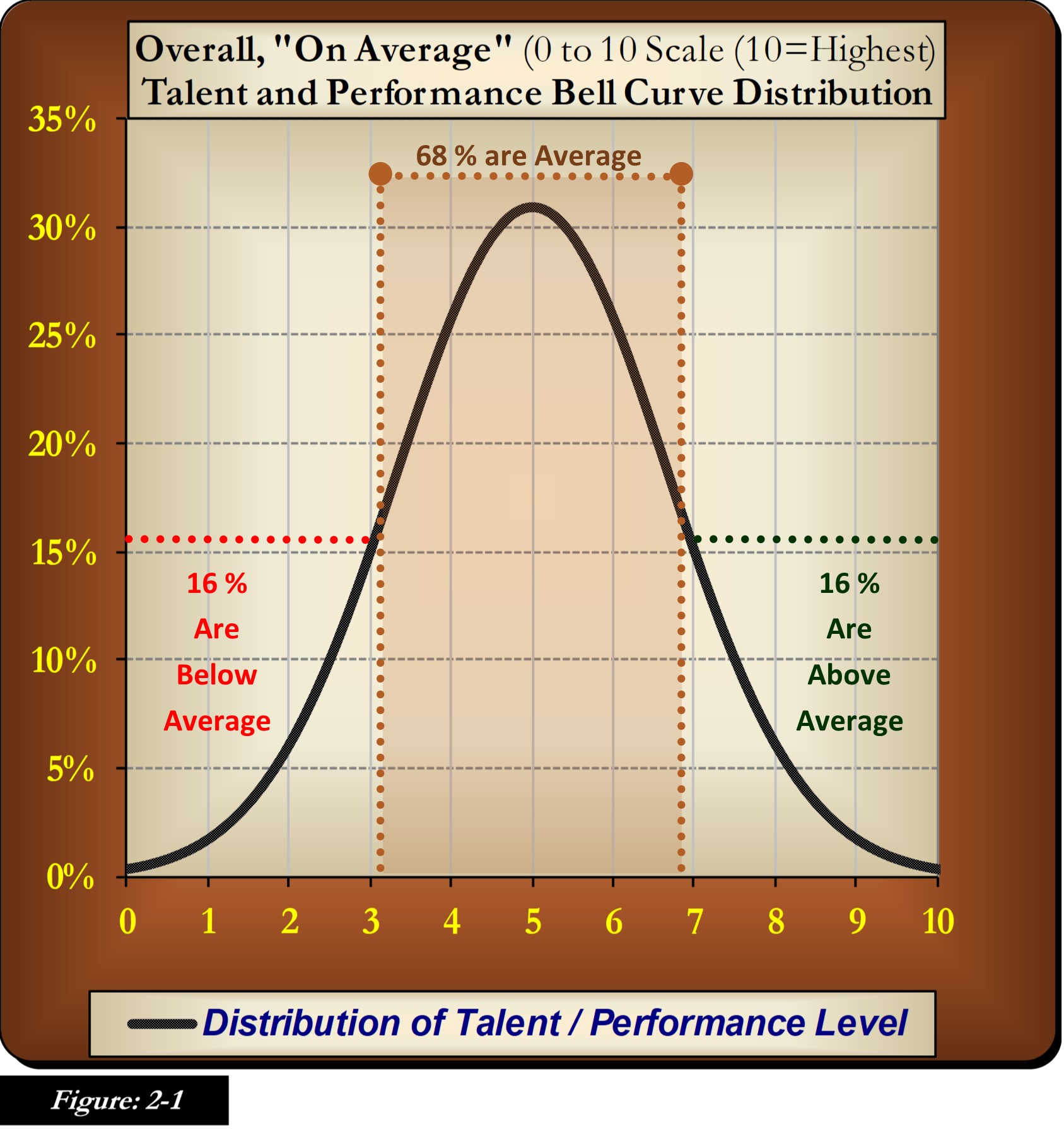
1. Average DMQ–Inner Circle (4.0’s to 6.0’s) When we look at the Standard Bell Curve, we know 68% of talent is “Average”. Basic math lets us know that 16% are “Above Average” and 16% are “Below Average”. Thus; objectively, 84% (68% + 16%) of leaders select an “Average” or “Below Average” Inner Circle. Therefore, leaders in this group should expect “Average” decisions to be contributed by their Inner Circles.

.

Interestingly, our decision about “how good our decisions are”, will typically be inflated since “Average” decision makers typically see their decisions as “Above Average”. This is an example of the DMQ Circular Loop Syndrome described in my leadership book, “Get MAD! 7 Keys to Being an Admired, Kick-Ass Leader”.

Objectively (regardless if we like it or not), 84% of Leaders, Talent, Profits, etc. are

2. Mixed DMQ–Inner Circle (4.0’s to 8.0’s) This is an interesting scenario and decision outcomes will vary based on which members of the Inner Circle the leader acquires feedback. We’ve all observed leaders making a brilliant decision one time and then a less than stellar decision the next time; while over time, there is an obvious lack of consistency.

.

3. High DMQ–Inner Circle (7.5’s to 9.5’s) This group represents the top 16% and can be further split into roughly the Top-2.5% and the remaining 13.5%. This group will make extremely consistent and excellent decisions. There will typically be an eclectic group of talent within these Inner Circle groups. To outsiders, certain individuals in the group will often, not appear to fit. However; the diversity of thinking, range of options considered, etc. will create robust opportunities for leaders in this top talent bracket.


What does your Inner Circle look like?

  • Is it helping you achieve the success equal to your potential or are you consistently falling short?
  • Is it enabling your professional and personal dreams to become realities or vanish before your eyes?
  • Are you excited every day you wake up or experience a range of inconsistent, mixed emotions?
  • Are you intimidated by certain members of your Inner Circle or love that they’re ahead of you?


Who changes the world? I believe it’s almost exclusively the Top-7%. They are the only ones with the Talent Portfolios and social consciences needed to actually implement significant positive social impact.

.

If you believe you’re one of these executives, we’d love to explore possible opportunities.


Get Making A Difference! ~ JR

Leadership Priorities: Today’s Decisions Equal Tomorrow’s Opportunities

“Incidents of the past – a lost love, a missed opportunity – shape us

and make us what we are.” – Rana Daggubati

amazing-sunset-beach-clouds-540998

Consistently creating opportunities for amazing tomorrows, personally and professionally, is a rare talent. Most leaders appear to comprehend this relatively basic concept, but lack the Decision Making Quality (DMQ) and Execution-Excellence (Ex-Ex) to consistently incorporate these rare qualities into their priorities and lives. Thus; the bountiful harvest of a purpose-driven life, enriched with opportunities beyond the reach of most people, is potentially forfeited.

The “gift of oblivion” can be a beautiful, albeit, a deceptive asset. By only seeing the opportunities resulting from our actual decisions, we are oblivious to “what could have been”. Thus; “what could have been” is sadly, not even on the radar and obliviously isn’t even missed.

.

We’ll look at three of the underlying components that collaborate to create our overall DMQ and are components aligned with creating the brightest opportunities for our tomorrows. Please keep in mind, these are not 100% foolproof. However, I believe they are critical in determining the probability of our success.

beautiful-boardwalk-dawn-247314
adults-blur-couple-888899

1. DMQ-Vision of Future-Self (DMQ-VoFS)

2. DMQ-Self-Sabotage (DMQ-SS)

3. DMQ-Courage

. 

1. DMQ-Vision of Future-Self (DMQ-VoFS)I believe the strength-index of this competency, is the most critical determinant of our future success. Leaders who lack clarity of vision, typically make choices that work today, or even a few years into the future. However, their lack of vision-clarity when making decisions with long time horizons, typically leads to less than stellar outcomes. 

We see this in business, marriages, etc. For example, multiple research studies conclude that second marriages are more likely to end in divorce than first marriages. I believe this is primarily due to the DMQ Circular Loop Syndrome. People can change partners, believe they’re making better decisions, but they haven’t exchanged nor objectively elevated their DMQ.

. 

2. DMQ-Self-Sabotage (DMQ-SS) – This is a fascinating competency. Typically, leaders and people are rated on a scale of 0.0 to 10.0 (with 10.0 equal to the theoretical “Perfect”). With DMQ-SS, the rating is from 0.0 to -10.0. The basic formula for this DMQ-SS is equal to (DMQ-VoFS – 10.0). Thus; the stronger your DMQ-VoFS, the less likely you are to self-sabotage. Example: DMQ-VoFS = 6.0. Thus; DMQ-SS = (6.0 – 10.0) = -4.0

beautiful-woman-brunette-leaning-2131642

I observe this competency playing out routinely, both professionally and personally. There are many reasons why people utilize DMQ-SS; including denial, fear, good enough, stress, busy, etc. The best decision makers see their future-self with crystal clarity. This gives them the strength to make the best decisions today, in order to enable amazing possibilities in their futures.


3. DMQ Courage – This competency is straightforward. It takes courage to make the best decisions. Most leaders intend to live an okay, good or great life. Top-7%’ers are looking beyond great! They’re staring hard into the eyes of possibilities for an amazing future-self. They know they must re-write the “scripts” generally used by average leaders and accepted by most people in order to achieve new possibilities. Thus; they’ll get a lot of pushback from a wide range of people, including their inner circles. Top-7%’er courageously tailor today’s decisions to mesh with what is needed to create amazing possibilities for their future-selves.


I believe, if you are genuinely and truly committed to leading an amazing life, optimizing your DMQ (and its underlying framework competencies) will make all the difference in your life! Nail your priorities and go for amazing!


Who changes the world? I believe it’s almost exclusively the Top-7%. They are the only ones with the Talent Portfolios and social consciences needed to actually implement significant positive social impact.

.

If you believe you’re one of these executives, we’d love to explore possible opportunities.


Get Making A Difference! ~ JR

Written by IPG Social Impact's President

Decision Making Quality (DMQ): Why is it the Secret to Life?

“Use the formula P 40% to 70%, in which P stands for the probability of success

and the numbers indicate the percentage of information acquired. Once

the information is in the 40% to 70% range, go with your gut.”

.

General (USA-Ret) Colin L. Powell. Source: Briefing presented by Gen Powell to the

Outreach To America Program, SEARS Corporate Headquarters, Chicago, Illinois

building-businessman-fashion-999267

Powell eloquently simplifies DMQ into a macro view with this basic formula while reminding leaders that procrastination in the name of reducing risks actually increases risks.


In a future post, we’ll discuss the components that make up our overall DMQ, which include: DMQ-Base System, DMQ-Inner Circle, DMQ-Vision of Future Self, DMQ-Self-Sabotage, DMQ-Courage, DMQ-Heart and DMQ-Soul. In this post, we’ll discuss overall DMQ to understand a few underlying attributes?

I believe, as strange as it still sounds to me, DMQ is the Secret to Life. Here are three reasons for this belief.

.

First; The DMQ Circular Loop Syndrome is an inescapable gravity. Figure: 1-4 in my book, “Get MAD! 7 Keys to Being an Admired, Kick-Ass Leader”, explains this in great detail. In summary, DMQ-sub is a leader’s subjective view of their talents, which includes their own DMQ (see the circular loop issue?). DMQ-obj is the most objective view of their DMQ.

The Leadership Decision Making Quality (DMQ) Challenge / Opportunity
Objectively (regardless if we like it or not), 84% of Leaders, Talent, Profits, etc. are

Example of DMQ-obj, Fortune 500 CEO’s:  We all know objectively, 250 of the 500 CEO’s are in the bottom-half. However, does anyone believe 250 of the Fortune 500 CEO’s would agree they’re in the bottom-half? Subjectively, most CEO’s would likely rank themselves in the top-half or higher. This exemplifies the disconnect between DMQ-sub and DMQ-obj and the associated, unintended consequences that can impact our lives.

Second; in our travels through life, professionally and personally, we are constantly making choices. These choices in turn, open and close doors to new journeys and choices. When leaders make good choices, typically good options are availed. When leaders make breakthrough choices, breakthrough opportunities and Visions for new Possibilities are availed. A leader’s DMQ-obj today, is the primary catalyst; good, bad or ugly, for future possibilities.

boys-children-family-1102570

Third; a leader’s DMQ can be categorized into the past, the current and the future. Very rarely, does a leader’s “score” in these three categories change over their lifetime. Thus; the rearview mirror is the most likely predictor of one’s current and future DMQ. High DMQ Leaders with the strongest vision of future selves are able to muster up the patience and courage to make the best choices today, that in turn, enable new amazing possibilities to become available in their futures.


Absent a high DMQ-obj and Vision for Possibilities, leaders tend to make camouflaged, self-sabotaging decisions that look and feel like the right thing to do now; only to discover in the future, the options they wanted to have, hoped for, wished for, etc. aren’t available, due to their previous limiting decisions they made in the past. Their decisions enable more of what they’ve experienced in the past, just in different sizes, shapes and colors.


Create exceptional, amazing Visions of Possibilities, professionally, personally and in your communities; and then etch them into granite, if you’re committed to being an exceptional, holistic leader, in every area of your life.


Who changes the world? I believe it’s almost exclusively the Top-7%. They are the only ones with the Talent Portfolios and social consciences needed to actually implement significant positive social impact. If you believe you’re one of these executives, we’d love to explore possible opportunities.


Get Making A Difference! ~ JR

Written by IPG Social Impact's President
balance-cobblestone-conceptual-279470

Leadership: Are You a Top-7%’er?

“An impossible 90% of respondents believe they’re in the top 10% of performers.”


Source:  Survey of 2,000 Americans in middle management and above, 25 years and older, conducted by Beta Research Corp. of Syosset, N.Y. for BusinessWeek during June 28 to July 5, 2007, using an online panel. Margin of sampling error is plus or minus 2.2%.

adult-adventure-backlit-915972

Recently, I’ve engaged in a higher than normal number of conversations regarding leaders who believe they’re in the top 7% of their profession, and / or, they’re a Top 7% person in the world.


Here are a few questions swirling around this topic.


1.   What do Top-7%’ers look like and are their attributes easily recognizable?

2.   Can leaders move from the 93% Group to the 7% Group?


3.   Is it worthwhile to put forth the inordinate amount of energy required to lead the life of a Top-7%’er?

1. What do Top-7%’ers look … ?  This is a popular question. It’s been my observation, the #1 attribute of Top-7%’ers is; they consistently, even on jugular issues, put the interests of the most worthy people first. In addition, they do not view people interactions as transactional, whereas the traditional quid pro quo system is important. Lastly; they do not see professional and personal roles being independent. Thus; they lead holistic lives in which their same values, principles, beliefs, Decision Making Quality, etc. are used in all aspects of their life, including professionally and personally.

apple-communication-corporate-262465
blackboard-chalk-chalkboard-21696

2. Can leaders move … ?  I believe this is a fascinating topic; particularly in light of my belief, the answer in general is, “it’s unlikely”. In my personal observations, most Top-7%’ers were Top-7%’ers in high school, college, early in their careers, as parents, later in their careers, etc. One critical key in determining who these Top-7%’ers are, is their response to significant negative situations that affect their lives. Their responses in these gut-wrenching situations, including Decision Making Quality, Integrity, Execution-Excellence, Emotional Intelligence, Listening, etc. either solidifies their Top-7% status or exposes them as a 93%’er. It’s painfully difficult to be a Top-7%’er!

3. Is it worthwhile to put forth … ?  This is a question for your Decision Making Quality Objective (DMQ-obj, not to be confused with your DMQ-sub). Your choice coupled with your Talent Portfolio (competencies needed to implement your choice effectively), will determine the answer. In my leadership book, DMQ is hit on repeatedly; since I believe, it is the primary determinant of an individual leader’s success, particularly since DMQ is the “bridge” that spans (or falls short of) the gap between stimulus (something impacts us) and our response.

bridge-hanging-park-546913

Given the amount of effort, number of failures, requirement for unwavering courage, loneliness during the journey (only 7% are on the path less traveled), etc., it’s understandable why most leaders will not choose this arduous journey. To those who choose this lonely leadership path and are capable of being a Top-7%’er, on behalf of those people who’s lives you have changed or will positively change; yet who have no voice, “Thank You” from them, for Making A Difference!


Who changes the world? I believe it’s almost exclusively the Top-7%. They are the only ones with the Talent Portfolios and social consciences needed to actually implement significant positive social impact. If you believe you’re one of these executives, we’d love to explore possible opportunities.


Get Making A Difference! ~ JR

Written by IPG Social Impact's President

Perfect Leader? Guest Blogger: Nada NAYHI

“Emotional intelligence is the ability to sense, understand, and effectively apply

the power and acumen of emotions as a source of human energy, information,

connection, and influence.”- Robert K. Cooper. Ph.D.

Never be Afraid to be You

By Nada NAYHI

<Click to go to Nada’s LinkedIn Profile>

.

Enigmatic aura makes people more attractive…

Speak less but say more.

Think before you act.


Never be afraid to be you.

Never be afraid to try new things.

Never be afraid to give up the good to go for the great.


Just be yourself and amazing things will happen.

Someone loves you; someone doesn’t like you.

Always do what is right and be true to yourself.

You deserve more than you think. Never lose hope, never give up…


Everything happens for a reason, I can imagine your pain, I can see your smile, I can feel your broken heart…

Everyone’s emotional state is different…

Cherish every moment, and learn from yourself.


Don’t let circumstances steal your joy…

Follow your heart, not your fear…

Pray and be bold to face all your life struggles bravely.

After the rain, the sun shines brighter.

What is the first thing that comes to your mind when you think of a “perfect leader”?


You might picture someone who never lets their temper get out of control, no matter what kind of challenges or difficulties or painful situations they’re facing. Or; you might think of someone who builds great relationships with their teams and clients.


Emotional intelligence is the secret sauce of leadership.


Great leaders master their emotions and have the ability to recognize other people’s emotions.


People are emotional creatures; this is why it’s important in leadership roles, to be exceptionally talented in emotional intelligence. Thus; you’ll have the capacity to make others feel comfortable, to earn their trust and foster an environment that creates even more emotionally intelligent leaders.

2019-04-a-EQ-Diagram-Guest-Blogger-NAYHI

Emotional intelligence (EI) is a nonverbal process that both shapes your thinking and influences how well you interact with your environment.


For most people, emotional intelligence (EI) is more important than one’s intelligence (IQ), in reaching their goals and embracing success.


Written by our Guest Blogger, Nada NAYHI

Who changes the world? I believe it’s almost exclusively the Top-7%. They are the only ones with the Talent Portfolios, leadership and social consciences needed to actually implement significant, positive social impact.

.

If you believe you’re one of these executives, we’d love to explore possible opportunities.


 Get Making A Difference! ~ JR

Written by IPG Social Impact's President

Leadership: Are Your Scripts Helping or Hurting You?

The Universe is Knocking

by Nada NAYHI

LI Profile: https://www.linkedin.com/in/nada-nayhi-299959152/

.

Beauty is everywhere

Just open your eyes

Let yourself be free

Look up and smile

what a stunning sky!


The Universe is knocking

Just open your heart

Embrace your magic

And let go of the past

Emotions change so fast


Sometimes life isn’t easy

Oh how many times!

I felt beaten down…

But I believe in wishes

And I rise from my ashes


It’s up to you to choose

Every game, win or lose

It is not because…

You’re weak or strong

You’re right or wrong


Just remember…

Life is like a song

Dance the dance

And do not live

In a single song

In Nada’s eloquent poem, she penned:


“The Universe is knocking

Just open your heart

Embrace your magic

And let go of the past”


What does this quote mean to you? More importantly, how does your interpretation of this quote, impact your leadership success?


If we go back to “square one”, we know we’ve been told how to act, what to say, what to do, etc. since the day we were born. These thousands of scripts, given to us by a wide range of people who have touched our lives, helps us build a framework so we can  “operate” effectively in our lives. This leads to three key questions.

  1. Are the scripts you’re using as a leader, helping you lead a magical or mediocre professional and personal life?
  2. Are the scripts from your past helping or hurting you to grow as a professional and as a person?
  3. Are the scripts you’re using helping you to attract or repel people you would love to have in your life?


Embedded within each of these questions, are natural pitfalls of interpretations. In other words, the way we interpret the questions, not the questions themselves, may be the bigger challenge. The reason for this challenge is simple, yet complex. Simple; if we’re interpreting the questions from reasonably accurate, rewritten scripts. Complex, if we’re interpreting the questions from misaligned scripts that need to be rewritten in order for us to reach our leadership potential. We’ll delve into each question separately.

On #1: Are … lead a magical … ? From the poem, what is meant by “magical”? Our scripts used to define “magical” will vary from one leader to the next. Thus; one leader may believe their life, both  professional and personal, is magical, while many who know this leader, will see them as mediocre. On the flip side, we all know leaders that appear to have it all and lead a magical professional and personal life, while these leaders may characterize their life, both professional and personal, as mediocre.

blur-book-browse-256546
alphabet-arrangement-away-459846

On #2: Are … helping or hurting … ? From the poem, the “past” is a fascinating topic. Some leaders are energized by their past, while others are paralyzed and still others emboldened. I’ve found the ability to convert the past (good, bad and ugly) into intelligent energy for future growth, to be difficult; yet, critical for success. Thus; it’s important to build an Infrastructure for Success around you, with the key ingredient being your Inner Circle. (The Inner Circle was discussed in a previous blog post.).

On #3: Are … attract or repel … ? Who is “knocking” on your door of opportunity? As discussed in previous blog posts, the Laws of Attraction always play out long-term (but not necessarily in the short or intermediate term). Further, if you don’t like who you’re attracting, change you. If you believe you need to change, to attract people you’d love to have in your life professionally or personally (or both), it’s possible the scripts you’ve been using need to be rewritten. These new scripts can then be used to improve your Decision Making Quality (DMQ) and Execution-Excellence (Ex-Ex).

colleagues-friends-low-angle-shot-1065707

It’s tough to objectively evaluate our scripts, since we’ve been using many of them throughout our lifetime. Further; if you’ve been successful, you may believe your scripts are excellent. Understanding that pursuing success at level 0.0 to roughly 8.0 (10.0 = the theoretically highest level of success) involves primarily linear growth. From 8.0 to 9.0 the growth curve transitions from linear to an exponential curve. Then, from 9.0 to 10.0, it transitions to an even steeper, exponential curve.


Who changes the world? I believe it’s almost exclusively the Top-7%. They are the only ones with the Talent Portfolios and social consciences needed to actually implement significant positive social impact. If you believe you’re one of these executives, we’d love to explore possible opportunities.


Get Making A Difference! ~ JR

Written by IPG Social Impact's President

Leadership: Which Consequences Should We Choose?

My Life is for You

by Nada NAYHI

LinkedIn – https://www.linkedin.com/in/nada-nayhi-299959152/

I have a simple dream

I just want a simple life

Somewhere over the rainbow

To admire the beauty of the sky 


Seas, rivers, mountains

Prairies and waterfalls

What a sublime power!

What a stunning view!


Hmm! But I’m sure I will feel empty

Without people, without struggles

I will certainly miss something

My life will not be exciting


I believe I’m here for a reason

I have a head to have a vision

I have a heart to have a passion

I have a hand to help people


I know my element

I know my energy

I know my environment

I know that my life is not for me


My life is for you

Leaders use their Decision Making Quality (DMQ) in an attempt to optimize what they believe to be their best opportunities for success. This is truly a fascinating skill to observe for many reasons. I’ll touch on three of these reasons.


1 – DMQ to Select Your Consequences – Most leaders appear to use their DMQ to make choices that mitigate their exposure to risks. Thus; the consequence of this common, possibly flawed approach, is the choices selected tend to be mediocre or good … but not amazing!


Since every decision comes with its own “baggage of consequences”, consider selecting the consequences associated with the lost opportunities you intentionally (yes, intentionally) will choose to forfeit; if, you successfully implement a mediocre decision you did choose. Feel the pain, anguish, regret, etc. (that could last a lifetime), of forfeiting that which you consciously chose to not pursue; rather than, the good you feel when you select and successfully implement, the mediocre or good decision you did choose.

.

2 – DMQ to Create the Video of Your Life – Fast-forward your life to the moment you are about to meet your maker and together, watch the 5-minute video of your life.

How will this key decision you’re about to make today, with no guarantee of success, contribute toward you leading an amazing, purpose-driven life of holistic leadership in every aspect of your life?


Will you be excited, when you watch your entire personal life video, after you make that key choice today, that will only produce mediocre to good content? Hint: Mediocre doesn’t even make it into the 5-minute video!

change-choices-choose-277615
amazing-thailand-ancient-architecture-2070485

Personally, I’ve been blessed to experience plenty of mediocre, good and even great in my life. However, I’m always hungry to give and experience more “amazing”. I love “amazing” in business and in life. Thus; I’d rather crash and burn, than experience anything but, “amazing”.


Amazing is difficult to quantify; but, you can’t miss it when you see it and its presence is inescapably etched into the granite of your mind.

3 – DMQ to Positively Change Others’ Lives – Each decision we make, typically centers on our own lives. Imagine a culture where the people around you in your professional and personal lives become the center of your decision-making framework … not you!


Many are born and raised with “scripts” aligned with self-centered values. Re-write these flawed scripts to center on leading a purpose-driven life. Use your DMQ to lead an amazing, purpose-driven life centered externally, on positively impacting others. 

animal-biology-bright-1236523

Once we realize our Talent Portfolios, which have been self-centered and served us extremely well, are what enable us to positively impact others, we can truly begin leading amazing professional and personal lives.


Who changes the world? I believe it’s almost exclusively the Top-7%. They are the only ones with the Talent Portfolios and social consciences needed to actually implement significant positive social impact. If you believe you’re one of these executives, we’d love to explore possible opportunities.


Get Making A Difference! ~ JR


art-background-back-light-backdrop-1510659

Leadership: Is it About Years or Impact?

Source: The Stefanie Spielman Fund For Breast Cancer Research at The James

Source: The Stefanie Spielman Fund For Breast Cancer Research at The James

“People say ‘It’s a great thing that you’re doing,’ Chris Spielman said at the time. “I always say it would be a terrible thing if I didn’t.”

While playing linebacker with the Buffalo Bills, Chris decided to give up football for a year to stay home with his wife and children. This quote is from him, when his wife lost her hair because of chemotherapy treatments and he shaved his head.


Stefanie Spielman died at the age of 42, after a lengthy battle with cancer that began when she was only 30. The Spielmans raised more than $6 million for breast cancer research at Ohio State through the Stefanie Spielman Fund for Breast Cancer Research.


https://cancer.osu.edu/giving-back/special-funds/stefanie-spielman-fund-for-breast-cancer-research/stefanies-legacy

I believe leadership’s cornerstone measurement is anchored in the positive impact a leader creates in the lives of others. Thus, it’s not how many years a leader lives, but the significance of the leader’s impact, while they’re on this earth.


How many people do you know in their 80’s or older, who just didn’t make much impact over their long lifetime?


As a leader, if given the dichotomous choice: Would you rather make significant impact, such as Stefanie (you’ll need to read her story to appreciate her wide-ranging impact), but only live to be 42; or, make 1/100th the impact and live to be 92? Interesting choice!

beautiful-cliff-clouds-1659438
children-cute-excited-225017

In selecting the content for this blog, I recall Stefanie standing in the pew directly in front of me, looking like a picture of health, although she’d been diagnosed with cancer years earlier. We were attending the funeral services for a friend and a member of Stefanie’s cancer support group, who had just passed while only living into her mid-30’s and leaving her two daughters, both under the age of five. Many questions percolated in my head as I listened to the eulogy, written a few months earlier, by our friend, for her own funeral, inflections, emphasis, humor and all.

Leadership is often confused with “titles”. Exceptional leaders may have big titles, but most people with big titles are merely Average or Below Average leaders (84%, per the objective Bell Curve). If we examine the Fortune 500, 84% or 420 companies are objectively in the Bell (Average, 68%) or Below (16%). Thus; only about 16% or 80 are Above Average (or higher). Further, only one or two (0.3% x 500) would be considered an outlier.

Objectively (regardless if we like it or not), 84% of Leaders, Talent, Profits, etc. are

Chris’s quote at the top of this blog article was selected as an example on how he saw Stefanie’s hair loss,  his love for his wife and as a co-leader in his family. Exceptional leaders see problems, opportunities, etc. differently than most leaders. Equally important, exceptional leaders are able to actually implement effective solutions excellently that ultimately deliver positive social impact as part of their holistic solutions. These are key competencies required to be an exceptional, high-impact leader.


  • Are you, as a leader, objectively, in the Top-16%, Top-7% or Top-1%?
  • Would leaders in the Bottom-84%, Bottom-93% or Bottom-99% agree with your assessment (above)?
  • What is your definition for leaders in the Top-16%, Top-7% or Top-1%?


Lastly; what percent of your leadership capacity are you actually using to convert Visions for Possibilities into Implemented Realities that actually change other people’s lives? This final, litmus question will help you answer the three previous questions.


Who changes the world? I believe it’s almost exclusively the Top-7%. They are the only ones with the Talent Portfolios and social consciences needed to actually implement significant positive social impact. If you believe you’re one of these executives, we’d love to explore possible opportunities.


Get Making A Difference! ~ JR

Written by IPG Social Impact's President

Leadership: Do You Love People Enough to Let Them Fail?

“Remember your dreams and fight for them. You must know what you want from life. There is just one thing that makes your dream become impossible: the fear of failure.” ~ Paulo Coelho

Exceptional leaders do their best to enable professionals, communities and people in their lives to succeed. What happens when you’ve done your best, enabled them to the best of your ability, to be successful; yet, they make self-sabotaging decisions or okay decisions, that keep them from reaching their potential? The latter option is often viewed as a positive decision by many, since the decision is “good enough”.


For those rare leaders that “get it”, achieving good enough is even more painful than failing while pursuing higher successes commensurate with their Talent Portfolios and potential.

alone-backlit-concept-744667

We’ve all watched companies leave money on the table by underperforming while not being open to implementing positive financial changes, communities and non-profits not fundraising effectively to bring greater positive changes in the world and people in our inner circles not reaching their full potential. For me, this was (and still is, but to a lesser degree) absolutely painful to watch.

Once you’ve done all you can do, and they aren’t interested in exploring critical decisions with you any further, do you love them enough to let them fail, while hoping it will help them grow? They’ve entered the proverbial “fork in the road”: They’re going to do whatever they’re going to do. If their “lid” is insufficiently high, for example they’re a 7.5 on a scale of 0 to 10 (with 10 being theoretically “Perfect”) and the opportunity / challenge is a 9.0, they’re likely to fail.

art-broken-explosion-5287
alone-dusk-evening-1661296

The difficulty in watching this unfold, almost in slow motion, is eased when you thoroughly understand, embrace and live the Laws of Attraction. In these uncomfortable situations, the Laws are merely playing out. Learning to be at peace with yourself, knowing you’ve done your best, all while disappointingly observing colleagues, peers, superiors, organizations, non-profits, significant others, children, etc. fail (while not accepting your help), is still, often a lonely, painful and disappointing journey.

The positive growth you’ll go through as a leader during this time, will enable you to professionally and peacefully jettison these organizations and people out of your life (unless they are family) that aren’t able to continue with you in your unique and special journey, to becoming your optimal future self / leader.

adventure-background-blur-891252

“Be willing to go alone sometimes. You don’t need permission to grow. Not everyone who started with you, will finish with you.” ~ Dr. George C. Fraser

If you doubt the power of acutely seeing your future-self, please read Victor Frankl’s book, “Man’s Search For Meaning”. It was the prisoners of Auschwitz who had the strongest vision of their future-self, who were more likely to survive.

“The prisoner who lost faith in the future – his future – was doomed. With his loss of belief in the future, he also lost his spiritual hold; he let himself decline and became subject to mental and physical decay.” ~ Victor Frankl

Who changes the world? I believe it’s almost exclusively the Top-7%. They are the only ones with the Talent Portfolios and social consciences needed to actually implement significant positive social impact. If you believe you’re one of these executives, we’d love to explore possible opportunities.

Get Making A Difference! ~ JR

2011-12-a-JMR-Photo

What Is Your Leadership Style: Stair-Step or Chasm-Leap?

“Every creator painfully experiences the chasm between his inner vision and its ultimate expression. The chasm is never completely bridged. We all have the conviction, perhaps illusory, that we have much more to say than appears on the paper.” ~ Isaac Bashevis


Take a hard, long look into the “rear-view mirror” of your life to reflect upon your most significant successes as well as your eloquent crash and burn failures. What approach did you use in pursuing these hard-to-achieve goals; the safer Stair-Step or high-Beta Chasm-Leap?

adventure-challenge-cliff-1768879

Now; disregard the ultimate outcome of success, failure or somewhere in-between. Focus keenly on the “take off point” and recall the knowledge you possessed at that take-off point.

  • Could you see a clear path to success; albeit a few likely bumps along the way?
  • Were you the only one driving the success or were others collaborating and supporting you?
  • Had you ever produced a similar outcome or was this the first outcome of this type for you, your company, your community, etc.?


In the financial industry, the term Beta is used to measure an individual stock’s movements relative to the overall market’s movement. For example, a higher risk stock with a Beta of 2.5 should move 2.5 times more (higher or lower) than its index. Most investors attempt to avoid high Betas, since they find it difficult to stomach the potential losses.

accounting-business-close-up-1418347
black-and-white-bridge-daylight-1806053

Leadership (and life in general) styles can utilize this Beta concept. In utilizing the Standard Bell Curve, we know most leaders are similar to investors. They attempt to maximize their personal returns while minimizing their risks. Many successful careers have employed this strategy; which I refer to as the Stair-Step style. You can see each step, none are too far apart and you can plan each one out with a significant level of predictability.

Stair-Step’s opposite leadership style is Chasm-Leap. With the Chasm-Leap style, you can vaguely see the next step, you’re not sure how far away the landing point is before you jump and you’re not able to plan many of the details before you begin your leap. Why? Simply because the outcome you’re attempting to produce, has never been produced by you, your company, your community, etc. No leader has summoned the Intellectual Horsepower, courage and Vision for Possibilities … until you.

adventure-daylight-desert-6496

Industries, businesses, societies, etc. are changed by leaders with Chasm-Leaping styles; not by Stair-Steppers. However; once these major changes take place, I believe, if you observe closely, the Stair-Steppers who are early adopters to the new opportunities created by the Chasm-Leapers, are the primary beneficiaries long-term. Again; another major advantage to being a Stair-Stepper. Warning: There’s an unattractive component associated with Stair-Steppers. If you look at this Chasm-Leaper / Stair-Stepper relationship closely; it represents somewhat of a parasitic relationship, in which the Chasm-Leapers are the hosts. I won’t expand on this fascinating topic of its own, but do want to point this out.


If you’re looking to change the world, an industry, your company, your life, etc., you’ll need a double-dose of courage, a broad and deep Talent Portfolio and an extraordinary inner circle that supports and believes in your Vision for Possibilities. Your inner circle will help to intelligently prepare you for your leap and will also be the only ones willing to life-flight you out of the deep, dark chasm, on those times when you don’t reach the other side safely.


Who changes the world? I believe it’s almost exclusively the Top-7%. They are the only ones with the Talent Portfolios and social consciences needed to actually implement significant positive social impact. If you believe you’re one of these executives, we’d love to explore possible opportunities.


Get Making A Difference! ~ JR

Written by IPG Social Impact's President

How Robust or Limiting is Your Inner Circle?

artistic-blossom-bright-207962

“Surround yourself with the dreamers and the doers, the believers and thinkers, but most of all, surround yourself with those who see the greatness within you, even when you don’t see it yourself.” ~ Edmund Lee

Can we ever overvalue the importance of our inner circles? I don’t believe we can. If our inner circle is so important to our success, while impacting every aspect of our life, how do we keep it exceptionally healthy? Doing so will give us the opportunities to enjoy the fruits it produces through the Laws of Attraction.

abstract-art-awareness-268283

First; keeping our inner circles healthy requires us to bust our asses making sure we are constantly growing toward our potential. As we work toward our potential, we will observe changes taking place in our inner circles. Pruning, for example, takes place when those in our inner circles aren’t able to keep up and they self-jettison themselves from our inner circles. Caution: the reverse also takes place when we’re not able to keep up with other leaders’ inner circles.

Second; always give more than you take, long-term. In the short term you might only be able to give or just take, depending on your current environment and circumstances. Over your lifetime, the deepest members of your inner circle will give much more, not necessarily in quantity, but in value, to you, often at the timeliest moments in your life. The giver gets the greatest gift; the ability to give, not to receive.

adult-asia-boys-933622
abstract-black-and-white-blur-261763

Third; most of us need to wipe clean our prefilled slate of false or misleading scripts that we’ve been given or have learned, often beginning from birth, on how to live our lives, who we are, who we choose to be with, etc. Scripts are the predetermined biases about what is right, wrong, this way, that way … you name it. If we’ve chosen the right people for our inner circles (which changes as we grow as leaders), they will help us re-write the scripts that can lead to a wonderful, fresh, amazing lives. Your heart, not your head will help guide you in making these jugular decisions.

Being a leader in an organization or personally is often a lonely path (and lonelier the higher your potential). This is particularly true when it comes to pruning some branches from our inner circle. During your amazing journey through life, if you’re a 9.5 (10.0 = the theoretically perfect leader), on your road toward your optimal impact level, you are likely to surround yourself with 6.0 to 8.0’s. However, if people in your inner circle  max out at anything less than a 9.0, eventually, you’ll replace them with 9.0+ people, while you are pursuing your optimal self.

adventure-contemplate-depressed-54379

You’re on a quest to be the most significant leader you can be, given your Talent Portfolio and overall potential. This next sentence is critical to understand. It’s not about you and the self-centered benefits you can reap; rather, its about being the most significant, high-impact leader, given your Talent Portfolio, in order to positively change other people’s lives.


What an enormous responsibility! The gift, in return, is the privilege to lead a purpose-driven life!


Who changes the world? I believe it’s almost exclusively the Top-7%. They are the only ones with the Talent Portfolios and social consciences needed to actually implement significant positive social impact. If you believe you’re one of these executives, we’d love to explore possible opportunities.


Get Making A Difference! ~ JR